BMW motor oil specifications are designed around individual engine families, emissions systems, markets, and model years. Choosing oil simply because it is synthetic—or because it has a familiar viscosity such as 5W-30—is no longer sufficient.
Current BMW vehicles may require newer fuel-economy specifications such as Longlife-17 FE+, Longlife-19 FE, or Longlife-22 FE++. These standards are not universally interchangeable, so the correct approval must always be confirmed for the specific vehicle.
Why BMW Oil Specifications Matter
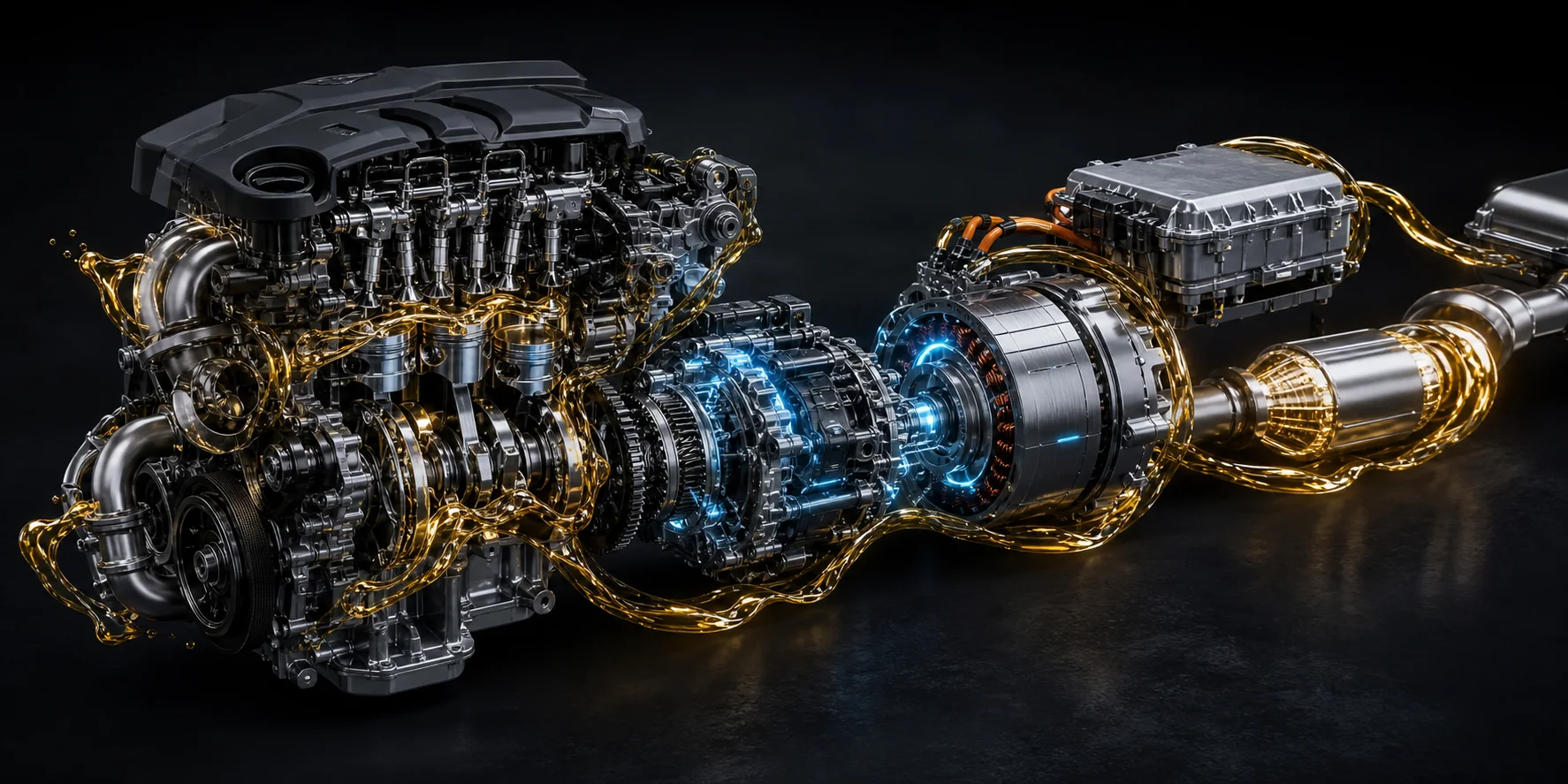
BMW engines use turbochargers, variable valve timing, direct injection, particulate filters, and increasingly sophisticated emissions-control systems. The correct oil must therefore do more than lubricate moving components.
An approved oil helps:
Protect bearings, pistons, timing components, and turbochargers against wear.
Control deposits, sludge, oxidation, and low-speed pre-ignition.
Maintain lubrication during cold starts and high-temperature operation.
Protect diesel and gasoline particulate filters through controlled additive chemistry.
Support the fuel-economy and emissions performance for which the engine was designed.
Terms such as “fully synthetic,” “European formula,” or “high performance” do not prove that an oil is suitable. The container should carry the exact BMW approval required by the vehicle—not merely say that the oil is “recommended for” BMW applications.
Current BMW Longlife Oil Standards
BMW’s Longlife standards define oil performance, viscosity options, emissions-system compatibility, and approved engine applications. The number is not simply a quality ranking: a newer specification is not automatically suitable for an older engine.
BMW Longlife-01
Longlife-01 remains important for many BMW gasoline engines without a gasoline particulate filter, particularly models from the early 2000s onward. It is also approved for certain diesel engines without a particulate filter and many older BMW engines.
LL-01 oils are commonly available in grades such as 5W-30, 5W-40, and 0W-40, depending on the product and market. They should not be replaced with a lower-viscosity FE oil unless BMW specifically permits that alternative for the engine. BMW’s LL-01 service documentation
BMW Longlife-04
Longlife-04 was developed to protect diesel particulate filters and gasoline particulate filters. BMW approves it for diesel engines with or without a DPF and for gasoline engines equipped with a GPF.
For gasoline engines without a particulate filter, regional restrictions apply: BMW’s documentation generally limits that application to Europe, Norway, Switzerland, and Liechtenstein. Owners should therefore avoid assuming that an LL-04 recommendation found for a European model also applies to an otherwise similar North American vehicle. BMW’s LL-04 service documentation
BMW Longlife-12 FE
Longlife-12 FE is a fuel-economy 0W-30 specification for selected engines. It applies to certain diesel engines from approximately model year 2014 and to approved gasoline applications, with some regional limitations.
LL-12 FE is not BMW’s newest oil standard, and it is not a universal replacement for LL-01 or LL-04. Its lower-viscosity formulation should only be used where specifically approved. BMW’s LL-12 FE service documentation
BMW Longlife-14 FE+
Longlife-14 FE+ introduced 0W-20 fuel-economy oil for selected gasoline engines from approximately model year 2014. It was never approved for all BMW gasoline engines and has no general diesel approval.
Many applications that once used LL-14 FE+ now reference the newer LL-17 FE+, but owners should follow the approval list in their vehicle documentation rather than assuming automatic interchangeability.
BMW Longlife-17 FE+
Longlife-17 FE+ is a widely used 0W-20 specification for selected BMW gasoline engines with or without gasoline particulate filters from model year 2014. BMW later extended approval to certain diesel engines from model year 2021.
It is particularly relevant to modern modular BMW engines, but it is not suitable for every BMW or every M engine. BMW’s current LL-17 FE+ documentation
BMW Longlife-19 FE
Longlife-19 FE became available in 2022. It is generally associated with SAE 0W-30 oil and is technically suitable for many diesel engines that previously used Longlife-04.
BMW states that many engines approved for LL-04 should now be filled with LL-19 FE, but the detailed engine-specific approval remains decisive. Product availability also varies by market. BMW’s LL-19 FE documentation
BMW Longlife-22 FE++
Longlife-22 FE++ is the most important recent addition. It uses ultra-low-viscosity SAE 0W-12 oil and is approved only for selected BMW Group gasoline engines—with or without gasoline particulate filters—from model year 2022.
LL-22 FE++ is designed to reduce internal friction and improve efficiency in engines engineered for it. It must not be treated as a universal upgrade or poured into an older engine simply because it is BMW’s newest specification. BMW’s LL-22 FE++ documentation
Choosing the Correct Oil
Use the following order when selecting oil:
Check the owner’s manual or BMW Driver’s Guide for the vehicle.
Look for an oil-information label under the hood where fitted.
Confirm the recommendation using the VIN, model year, engine code, and sales market.
Match both the BMW Longlife approval and the permitted SAE viscosity.
Verify that the product carries a formal BMW approval on its label or technical data sheet.
A viscosity grade alone is not an approval. Two 0W-20 oils can use different additive packages and meet entirely different manufacturer requirements.
Likewise, 5W-30 and 5W-40 are no longer safe universal recommendations. Depending on the engine, a BMW may require 0W-12, 0W-20, 0W-30, 5W-30, 5W-40, or a specialized grade such as 10W-60. Certain BMW M engines have requirements that differ significantly from regular production engines.
Oil Changes and Condition-Based Service
BMW’s Condition-Based Service system calculates maintenance requirements using elapsed time, mileage, and operating conditions. Current BMW maintenance documentation does not define one universal oil-change mileage for every vehicle; the car displays the remaining mileage and date for its next oil service. BMW’s 2026 maintenance guide
Short journeys, repeated cold starts, prolonged idling, stop-and-go traffic, and frequent high-load operation can affect service requirements. Owners should therefore follow the vehicle’s CBS indication and the market-specific maintenance booklet rather than relying on a generic “10,000 to 15,000 miles” rule.
BMW M vehicles may also require a separate running-in service. This should not be confused with the routine oil-change schedule for standard BMW models.
DIY Oil Changes and Warranty Considerations
A competent owner can change BMW engine oil, provided the correct oil approval, filter, filling capacity, drain-plug procedure, and tightening torque are used. Avoid overfilling, and check the level using the vehicle’s prescribed electronic measurement procedure.
Keep receipts showing:
The oil brand and product name.
The BMW approval and viscosity.
The quantity purchased.
The oil filter used.
The date and vehicle mileage.
Using non-BMW-branded oil does not automatically cancel all warranty protection. However, BMW warranty documentation excludes malfunctions caused by improper or inadequate maintenance, and damage attributable to an unsuitable oil may not be covered.
Disposal and Environmental Responsibility
Used engine oil must never be poured into drains, onto the ground, or placed in household waste. Store it in a sealed container and take it to an authorized recycling center, automotive retailer, or service facility.
Fully electric BMW vehicles do not require engine-oil changes. Plug-in hybrids still contain a combustion engine and must follow the oil specification and CBS requirements assigned to that engine.
Conclusion
The correct BMW motor oil can no longer be identified by viscosity or the word “synthetic” alone. Modern specifications now range from LL-01 and LL-04 to fuel-economy standards such as LL-17 FE+, LL-19 FE, and the newer 0W-12 LL-22 FE++.
Always select oil using the exact model, engine, model year, market, and emissions equipment. When the owner’s manual and general online advice disagree, the vehicle-specific BMW recommendation should take priority.