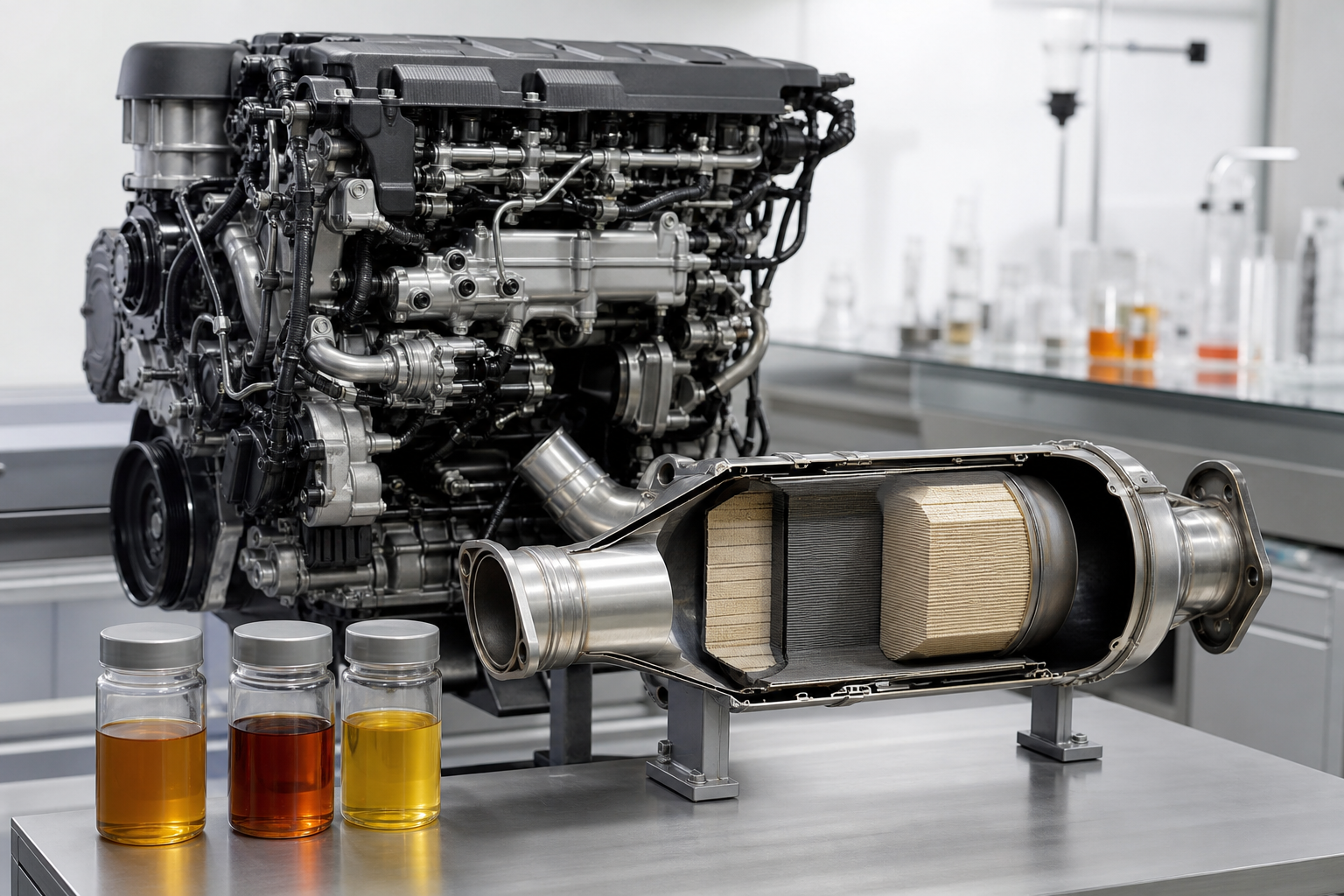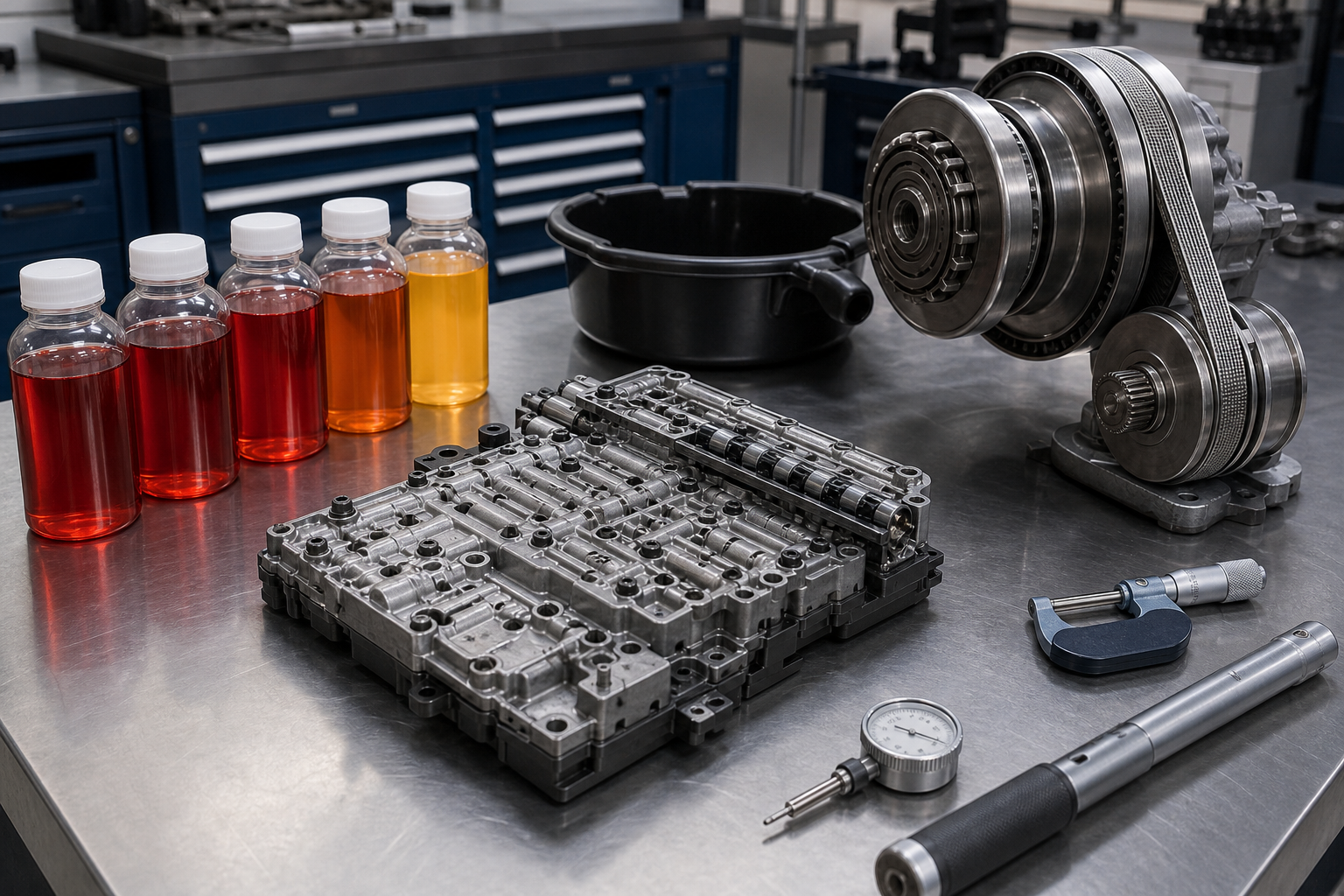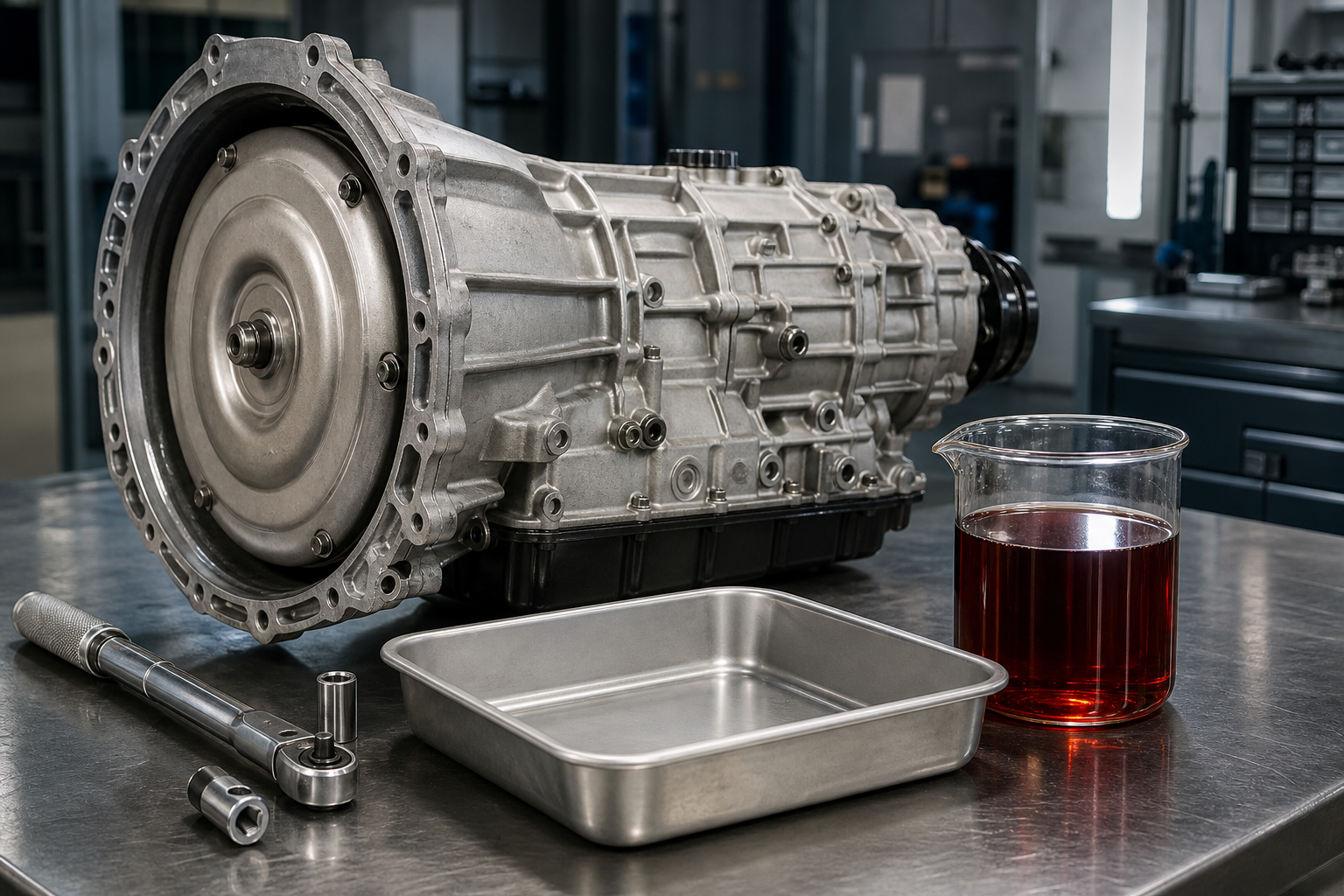
TES numbers are transmission-fluid specifications, not viscosity grades
Allison TES 668, TES 295 and TES 389 identify transmission-fluid performance categories used in many Allison commercial on-highway automatic transmissions. They are not SAE viscosity grades, and they do not mean that every red automatic transmission fluid is interchangeable. A transmission fluid must provide the intended friction behavior for clutch engagement, protect gears and bearings, resist oxidation at operating temperature, flow suitably in cold weather, and remain stable through long service.
The practical point is simple: begin with the vehicle or equipment manufacturer’s current service information and the transmission model. Then select a fluid that is Allison Approved for the required TES category. A label saying that a fluid is “suitable for,” “recommended for,” or “compatible with” a specification is not the same thing as the exact product appearing on Allison’s current approved-fluids list.
TES 668: Allison’s current preferred on-highway fluid family
TES 668 is Allison’s current synthetic on-highway fluid specification. Allison describes it as its newest fluid specification and recommends approved TES 668 fluids for the 1000, 2000, 3000 and 4000 Series, H 40/50 EP, eGen Flex and eGen Power on-highway products. The specification addresses durability-related areas including fluid stability, lubrication and cold-operation performance.
For a fleet or owner whose transmission documentation permits it, TES 668 is therefore not merely a newer name on a bottle. It is an Allison-controlled approval category intended for modern severe-duty operation and extended-drain service strategies where the applicable transmission, filter arrangement, duty cycle and maintenance program allow them.
A real approval is traceable. Allison’s current list identifies each approved product by brand, product name and one or more approval numbers. Check the exact fluid name rather than assuming that every fluid from the same marketer, or every product with “668” printed prominently on the front label, has the same approval status.
TES 295: still important, but not the newest specification
TES 295 is the earlier synthetic Allison on-highway specification that remains approved for specified applications. Allison’s current approved-fluids guidance continues to recognize TES 295 for the 1000, 2000, 3000 and 4000 Series and H 40/50 EP on-highway product families, while advising customers using TES 295 to consider TES 668 at their next service.
That wording matters. TES 668 is the preferred current family, but it does not make every existing TES 295-filled transmission incorrectly serviced. A vehicle may still be operating properly on an approved TES 295 product when its documentation allows it. Conversely, a fluid marketed as “TES 295 compatible” should not be treated as an approved product without checking Allison’s list and the vehicle manufacturer’s requirements.
For many transmissions, both TES 295 and TES 668 are associated with extended-drain capability. But “extended” is never a universal mileage promise. Allison’s service literature makes the interval dependent on the transmission series, vocation, fluid type, filters and, where used, oil analysis. See why drain intervals depend on the application for the broader principle: the fluid specification is one part of the maintenance decision, not a replacement for the scheduled service information.
TES 389: an approved category with different maintenance implications
TES 389 is an approved fluid category for traditional Allison on-highway products. In relevant Allison service information, it is the minimum approved fluid type for certain applications and is associated with standard, rather than extended, fluid-change intervals. Allison also indicates that TES 295 and TES 668 are preferred over TES 389 for its 3000 and 4000 Series applications.
The cold-weather distinction is also meaningful. Allison documentation for the 3000 and 4000 Series lists a lower minimum operating temperature for TES 295 and TES 668 than for TES 389: minus 35°C (minus 31°F) versus minus 25°C (minus 13°F). That does not mean a fluid alone eliminates the need for proper cold-weather procedures. It does show why a transmission’s required fluid category should not be chosen solely by price or by a broad claim of ATF compatibility.
| Specification | Practical role | Service takeaway |
|---|---|---|
| TES 668 | Current Allison synthetic on-highway approval family. | Allison’s preferred current choice where the transmission documentation permits it. |
| TES 295 | Earlier Allison synthetic on-highway approval family. | Still relevant where approved, but Allison directs customers to consider TES 668 at the next service. |
| TES 389 | Approved category for traditional on-highway applications. | Typically carries standard service-interval treatment and can have less low-temperature margin. |
Mixing, top-offs and change intervals
Fluid chemistry may permit limited top-off situations, but maintenance rules can change when fluid categories are mixed. Allison service information states that a mixture of TES 668 or TES 295 with Allison Approved TES 389 fluid must follow TES 389 fluid-and-filter change recommendations. In other words, adding premium fluid to an unknown or TES 389-filled transmission does not automatically create a full TES 668 or TES 295 extended-drain fill.
That is especially relevant after purchasing used equipment or when service history is incomplete. Identify the existing fluid if possible, avoid relying on color, and do not extend the drain interval until the transmission has been serviced according to the applicable procedure and the required concentration or maintenance conditions have been met. Allison also does not recognize fluid-exchange machines as a means of guaranteeing complete removal of used fluid.
Do not substitute ordinary DEXRON fluid by assumption
DEXRON and Allison TES labels are separate systems. Allison’s commercial on-highway service publication states that DEXRON-III and DEXRON-VI fluids are no longer approved for use in its commercial on-highway transmission products. Therefore, a bottle’s DEXRON claim, synthetic base oil or familiar red color does not establish suitability for an Allison unit requiring a TES-approved fluid.
This is the same verification discipline needed with any automatic transmission fluid: compare the exact required specification with the exact product approval, rather than treating a general-purpose ATF as a universal substitute. For passenger-vehicle applications, see why “universal ATF” claims need verification.
How to select fluid correctly
Identify the transmission model and the vehicle’s vocational use.
Read the current vehicle maker and Allison service documentation for the required fluid category and service interval.
Match the fluid’s full product name to Allison’s current approved-fluids list.
Use the required filters and account for any oil-life-monitor or prognostics settings.
After a top-off or partial refill, apply the service rule for the resulting fluid mixture rather than assuming the longest interval.
TES 668, TES 295 and TES 389 are meaningful engineering requirements, not marketing shorthand. The correct choice is the approved fluid category specified for the particular Allison transmission and operating conditions.