ACEA is a performance sequence, not a blanket vehicle approval
European-labeled engine oils commonly carry claims such as ACEA A3/B4-23, C3-23 or C6-23. These codes are useful, but they are often misunderstood. An ACEA claim identifies an engine-oil performance category developed for European gasoline, light-duty diesel, and heavy-duty diesel applications. It is not, by itself, an approval from the manufacturer of a particular car, van, or truck.
That distinction matters because an automaker can require characteristics beyond the ACEA tests and limits. It may specify a particular viscosity grade, tighter chemical limits, additional engine tests, special fuel-economy performance, seal compatibility, oxidation control, or a proprietary approval process. Therefore, an oil that correctly claims an ACEA sequence may still be unsuitable when the owner’s manual calls for a named manufacturer specification.
How to read an ACEA code
An ACEA code has a class letter, a category number, and sometimes a two-digit year suffix. The letter identifies the broad family; the number separates oils with different performance and application characteristics within that family.
| Code element | Plain-English meaning |
|---|---|
| A/B | High-SAPS oils for gasoline and light-duty diesel engines. |
| C | Oils designed for compatibility with exhaust aftertreatment, including diesel particulate filters, gasoline particulate filters, and three-way catalysts. |
| E | Heavy-duty diesel engine oils. |
| F | A newer heavy-duty diesel family with specific viscosity requirements; it is not simply a substitute for every E-category oil. |
| -23, -24 | The year in which that category’s performance severity was implemented. It is mainly an industry identifier, not an oil age or production date. |
SAPS means sulphated ash, phosphorus, and sulphur. These chemical properties affect both oil performance and exhaust-system durability. “High-SAPS,” “mid-SAPS,” and “low-SAPS” are shorthand descriptions, not a universal ranking from better to worse. The correct level depends on the engine and its emissions hardware.
Why C-category oil is not automatically safer for every engine
The C categories are commonly associated with modern engines that use emissions-control hardware. Their ash, phosphorus, and sulphur limits are intended to help preserve the working life of particulate filters and catalysts. But that does not make every C oil interchangeable, or automatically superior to an A/B oil.
For example, the light-duty C categories differ in high-temperature, high-shear viscosity, usually shortened to HTHS. HTHS is a measure of an oil’s resistance to flow under severe heat and shear conditions that are relevant to heavily loaded lubricated contacts. A C3 oil has a higher minimum HTHS requirement than a C5, C6, or C7 oil. In practical terms, those categories can represent meaningfully different viscosity-and-protection design targets even when the bottles share the same SAE viscosity grade, such as 5W-30.
ACEA C6 and C7 also include modern protection requirements associated with turbocharged direct-injection engines, including low-speed pre-ignition control and diesel turbocharger compressor-deposit protection. C7 is aimed at especially low HTHS viscosity, with stronger fuel-economy emphasis. None of that permits substituting C7 for C3, or C6 for C5, unless the vehicle manufacturer explicitly permits it.
The number is not a “higher is better” scale
ACEA category numbers should not be read like software versions or a simple quality ladder. C3 is not automatically obsolete because C6 exists; C6 is not universally “better” because its number is higher. Each category serves a defined technical application. The same principle applies to A3/B4, A5/B5, and A7/B7.
Within the A/B family, A3/B4 is a higher-HTHS category often used where a robust, stable oil is specified. A5/B5 and A7/B7 are intended for engines designed for lower-viscosity oils. A7/B7 adds specified protections for modern turbocharged direct-injection gasoline engines and modern direct-injection diesels compared with A5/B5. However, an engine designed around A3/B4 must not be assumed compatible with an A7/B7 oil merely because the latter has additional test requirements.
What the year suffix does—and does not—tell you
The suffix in an ACEA claim, such as C3-23, identifies the year of implementation for that performance level. ACEA uses the suffix to distinguish a category revision when tests, limits, or other technical requirements change. It does not identify when the bottle was filled, how fresh the product is, or an oil-change interval.
ACEA updates sequences as test hardware changes and engine technology evolves. During transition periods, products meeting an earlier valid issue may remain on sale. This is one reason a shopper may encounter different suffixes on otherwise similar oils. The important question is not whether the suffix looks newest, but whether the exact claim satisfies the current requirement for the vehicle.
What an ACEA claim means in the marketplace
ACEA sequences define a minimum quality level for oils making the claim under the European Engine Lubricants Quality Management System. Claims are made on a self-certification basis, supported by controlled testing and the associated quality-management process. That is different from a manufacturer approval, where the vehicle maker has established a separate requirement and may maintain a formal approved-product list or licensing arrangement.
This does not mean an ACEA claim is meaningless. A legitimate claim communicates important tested performance and is often part of the vehicle requirement. It means only that the claim answers one question: Which ACEA category does this oil meet? It does not necessarily answer the separate question: Is this oil authorized for my specific engine?
A practical label-checking sequence
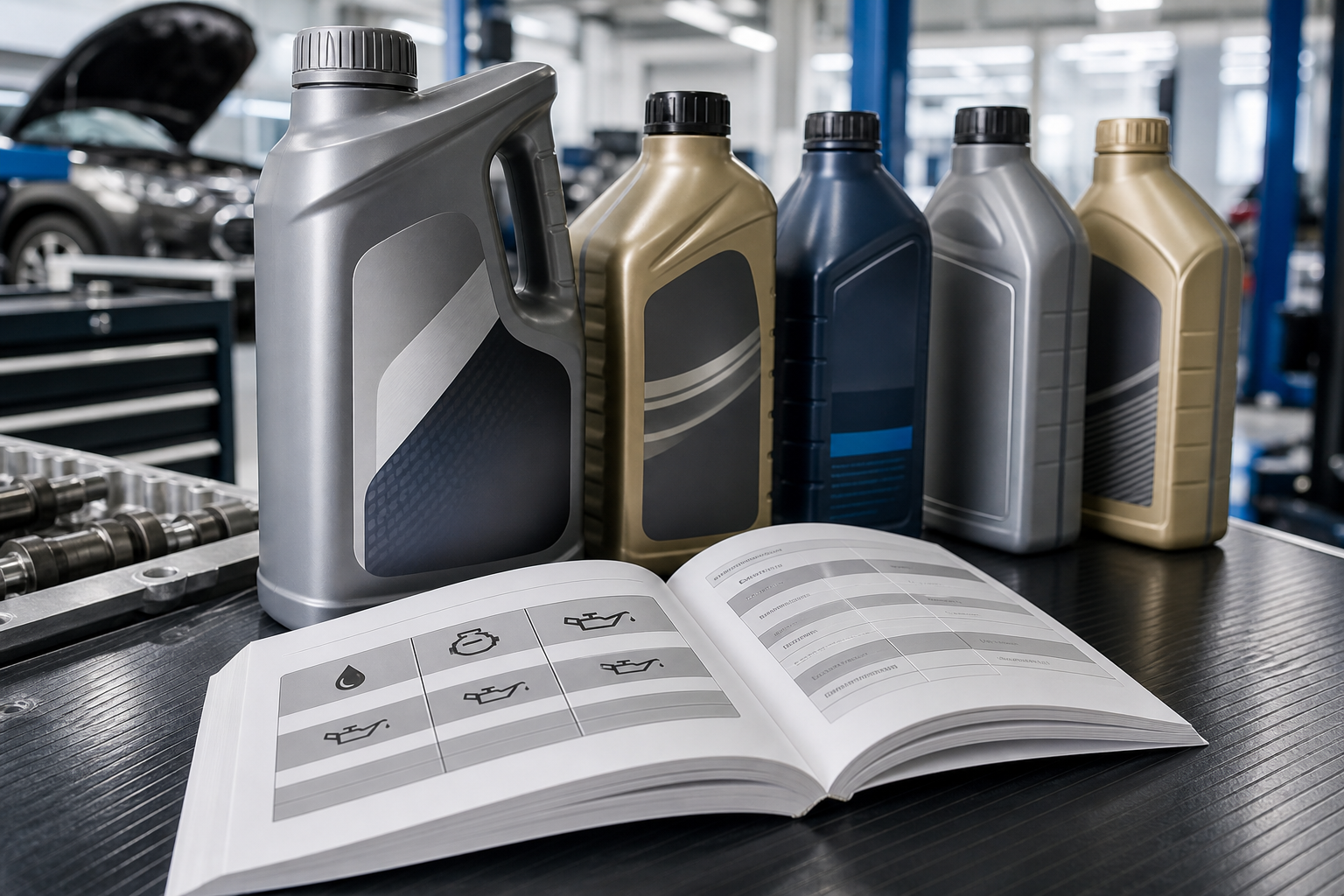
Find the exact engine-oil requirement in the current owner’s manual, service information, or manufacturer documentation for the vehicle identification number where applicable.
Match the required manufacturer approval first, if one is specified.
Match the required SAE viscosity grade and any permitted alternatives for the ambient conditions.
Use the ACEA claim to confirm the relevant performance family and category.
Do not infer compatibility from terms such as “suitable for,” “recommended for,” or from a similar-looking ACEA code alone.
An ACEA sequence is valuable technical information, but it is not a universal permission slip. When an automaker specifies its own approval, that approval—and the current vehicle documentation—takes priority.