What dexosD means
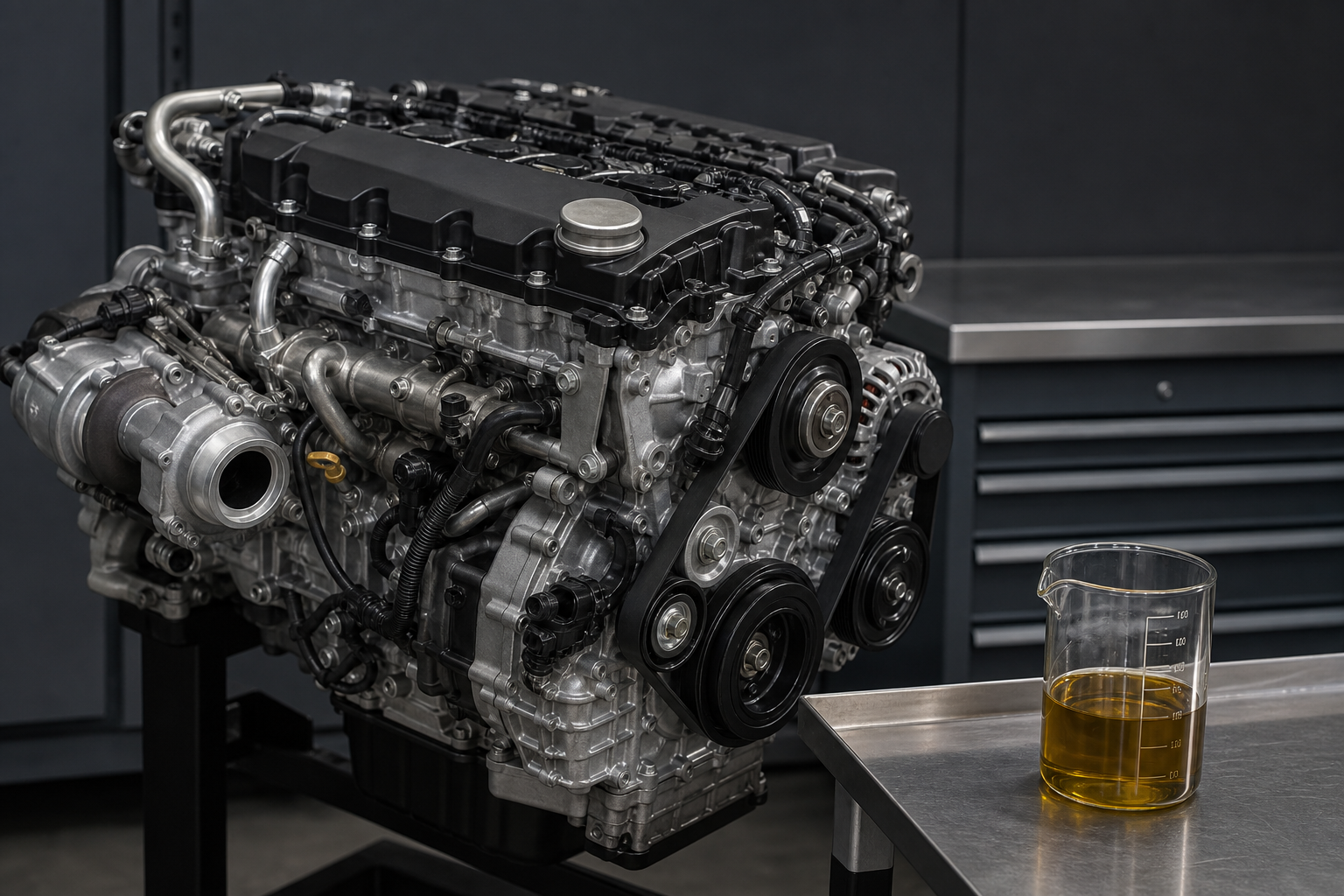
dexosD is General Motors’ licensed engine-oil requirement for light-duty diesel applications. It is a performance and quality specification administered by GM, not an SAE viscosity grade and not a generic synonym for diesel oil. An oil’s 0W-20, 5W-30 or 5W-40 label describes how it flows under defined cold- and hot-temperature test conditions; dexosD identifies a separate set of requirements and a GM licensing status.
This distinction matters because an oil can have the viscosity printed in a vehicle manual yet still lack the required dexosD approval. Conversely, an oil listed as dexosD is not automatically right unless its viscosity grade also matches the manual. Treat the two requirements as a pair: the correct GM specification and the correct SAE viscosity grade.
GM’s dexos licensing information states that dexosD replaced dexos2 for light-duty diesel engines. GM also says dexosD oils meet or exceed dexos2 performance and may be used for a diesel application that formerly specified dexos2, provided that the appropriate viscosity grade is selected. That is a useful service update for older manuals, but it is not permission to choose a different viscosity simply because the newer specification is backward compatible.
Why diesel engines need a specific oil requirement
Diesel engine oil works in a demanding environment. Combustion soot can thicken the oil, while high temperatures, shear forces and fuel dilution can reduce its useful viscosity or accelerate oxidation. Many modern diesels also use exhaust aftertreatment hardware, including diesel particulate filters. Oil formulation therefore affects not only wear and deposit control inside the engine, but also the long-term environment faced by emissions-control equipment.
GM does not publish the complete proprietary dexosD test matrix as a simple consumer label guide. What matters at the service counter is that dexosD is a controlled GM requirement: a marketer must have a product licensed for the claim. That differs from a broad statement such as “recommended for” or “suitable for” dexosD use. Those statements may be informative, but they are not the same as GM certification.
The practical approach is simple: when the manual calls for dexosD, select an oil carrying the dexosD approved marking and verify the product in GM’s current licensed-product directory where possible. GM says licensed dexos products carry an approval icon and an 11-character alphanumeric license number on the package. Check the exact bottle, because a brand family can include products with different viscosities and different approvals.
dexosD, dexos2 and API diesel categories are not interchangeable labels
It is easy to confuse dexosD with dexos2 or with an API diesel category because the same oil bottle may carry several claims. They answer different questions.
| Marking or term | What it tells you | What it does not tell you by itself |
|---|---|---|
| dexosD | The oil is licensed by GM for the dexosD requirement. | Which viscosity grade the specific vehicle requires. |
| dexos2 | An earlier GM licensed requirement used across certain applications. | That every dexos2 oil is the correct choice for a newer light-duty diesel. |
| API CK-4 or FA-4 | An API heavy-duty diesel service category with defined industry performance intent. | GM dexosD licensing or universal vehicle compatibility. |
| 0W-20, 5W-30 or 5W-40 | The oil’s SAE viscosity grade. | Its dexosD approval status or complete performance capability. |
API CK-4 is intended for modern high-speed four-stroke diesel engines and includes protection targets relevant to oxidation, soot-related viscosity increase, wear, deposits and aftertreatment durability. API FA-4 is a lower-HTHS-viscosity category for certain specified on-highway diesel engines, and API explicitly says it is not interchangeable or backward compatible with CK-4 and earlier API diesel categories. These are important industry classifications, but neither API category substitutes for a vehicle maker’s named approval.
For more background on the API marks and category hierarchy, see the site’s API engine-oil service category charts. The key point for GM diesel service remains unchanged: if the vehicle documentation calls for dexosD, use a dexosD-licensed oil in the stated viscosity.
Why viscosity remains vehicle-specific
GM’s current light-duty 3.0L Duramax diesel supplement is a clear example of the two-part instruction. It specifies dexosD and SAE 0W-20. A dexosD 5W-30 might be a legitimate licensed product, but that alone does not make it the routine-fill choice for an engine whose manual calls for 0W-20.
The dexosD licensed-product directory shows that licensed oils exist in more than one viscosity grade, including 0W-20 and 5W-30. In August 2024, GM also announced the addition of 0W-40 and 5W-40 to the dexosD specification, with a requirement for those products to display both dexosD and dexos2 logos. This development illustrates why oil selection cannot be reduced to “all dexosD oils are the same.” A new grade being permitted under a specification does not revise every vehicle’s factory viscosity recommendation.
Viscosity affects cold-start flow, hydrodynamic film thickness and oil-pump operation. The correct grade may also depend on the engine design, calibration and operating climate. Read what oil viscosity means if you need a refresher, but do not use viscosity alone as the selection rule.
A reliable dexosD buying checklist
Start with the current owner’s manual or GM service information for the exact engine and model year.
Confirm that the manual calls for dexosD, or that GM’s dexosD transition guidance applies to the older diesel dexos2 requirement.
Match the specified SAE viscosity grade exactly unless GM provides a documented alternative for that vehicle and conditions.
Look for the dexosD approved icon and license number on the actual container.
Cross-check the oil against GM’s live dexosD licensed-product list when there is any doubt.
Follow the manufacturer’s oil-life monitor or stated maintenance schedule; an approved oil does not automatically justify extending the drain interval.
In short, dexosD is meaningful because it is a GM-controlled, licensed oil requirement for light-duty diesels. It should be read alongside—not instead of—the viscosity grade and the current vehicle documentation. That is the safest way to avoid substituting a merely similar-looking diesel oil for the one the engine was designed to use.