ATF DW-1 and HCF-2 are not interchangeable names
Honda ATF DW-1 and Honda HCF-2 are both transmission fluids, but they are intended for different types of transmissions. ATF DW-1 is associated with Honda conventional automatic transmissions, while HCF-2 is a fluid requirement for specified Honda continuously variable transmissions (CVTs). Neither designation is an SAE viscosity grade, and neither means “Honda transmission fluid” in a universal sense.
This distinction matters because transmission fluid does more than lubricate gears and bearings. It is also a hydraulic working fluid and a friction material. It must deliver predictable clutch engagement, protect components under load, manage heat, and remain stable for the service interval. A fluid that is close in thickness, red in color, or marketed as fully synthetic may still have the wrong friction characteristics for the transmission.
The practical rule is simple: identify the exact transmission fitted to the vehicle, then use the fluid named in the current owner’s manual or service information for that vehicle. Do not choose by model name alone. A Honda Accord, Civic, CR-V, or HR-V range can include different powertrains and transmission designs across years, markets, and trim levels.
What Honda ATF DW-1 means
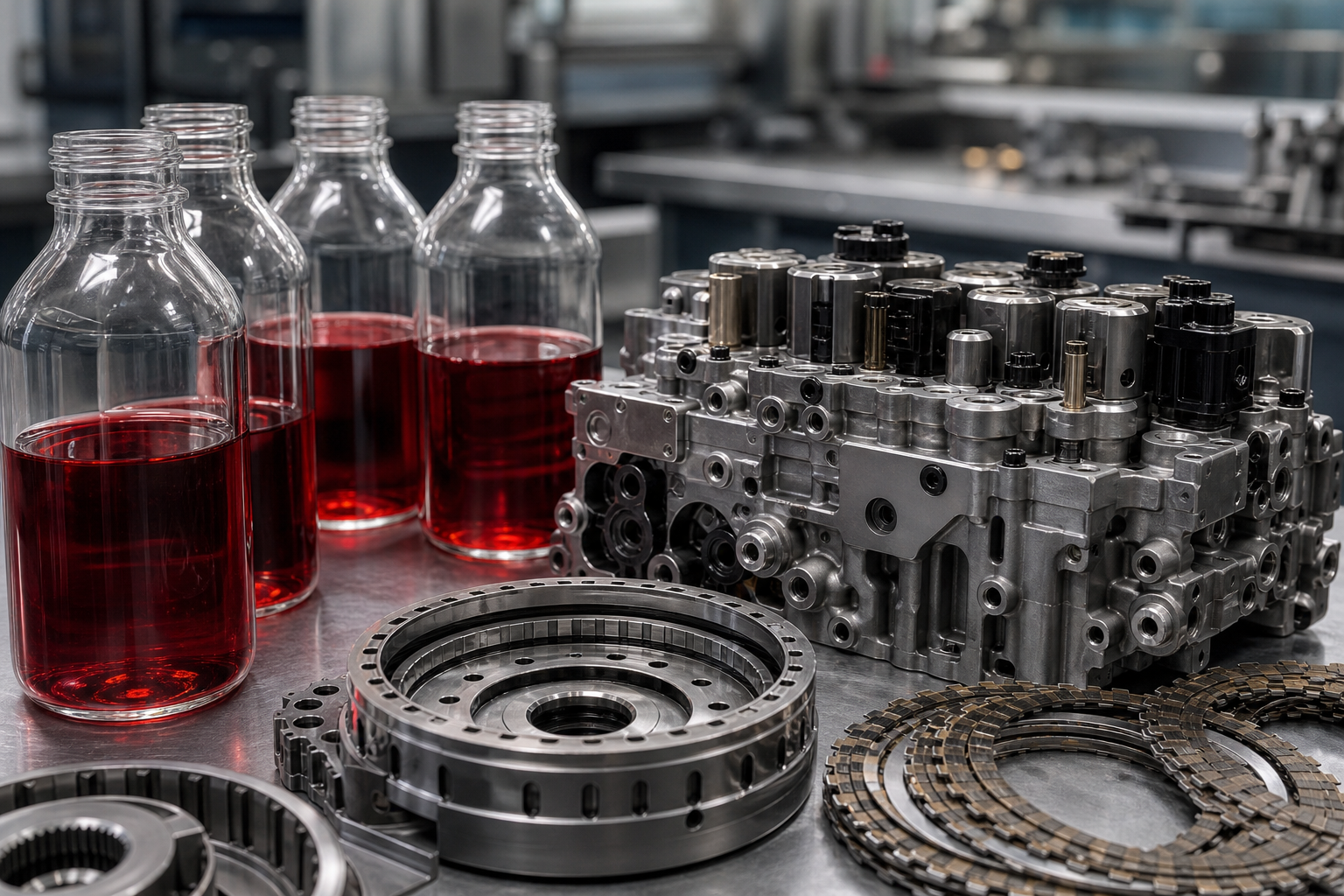
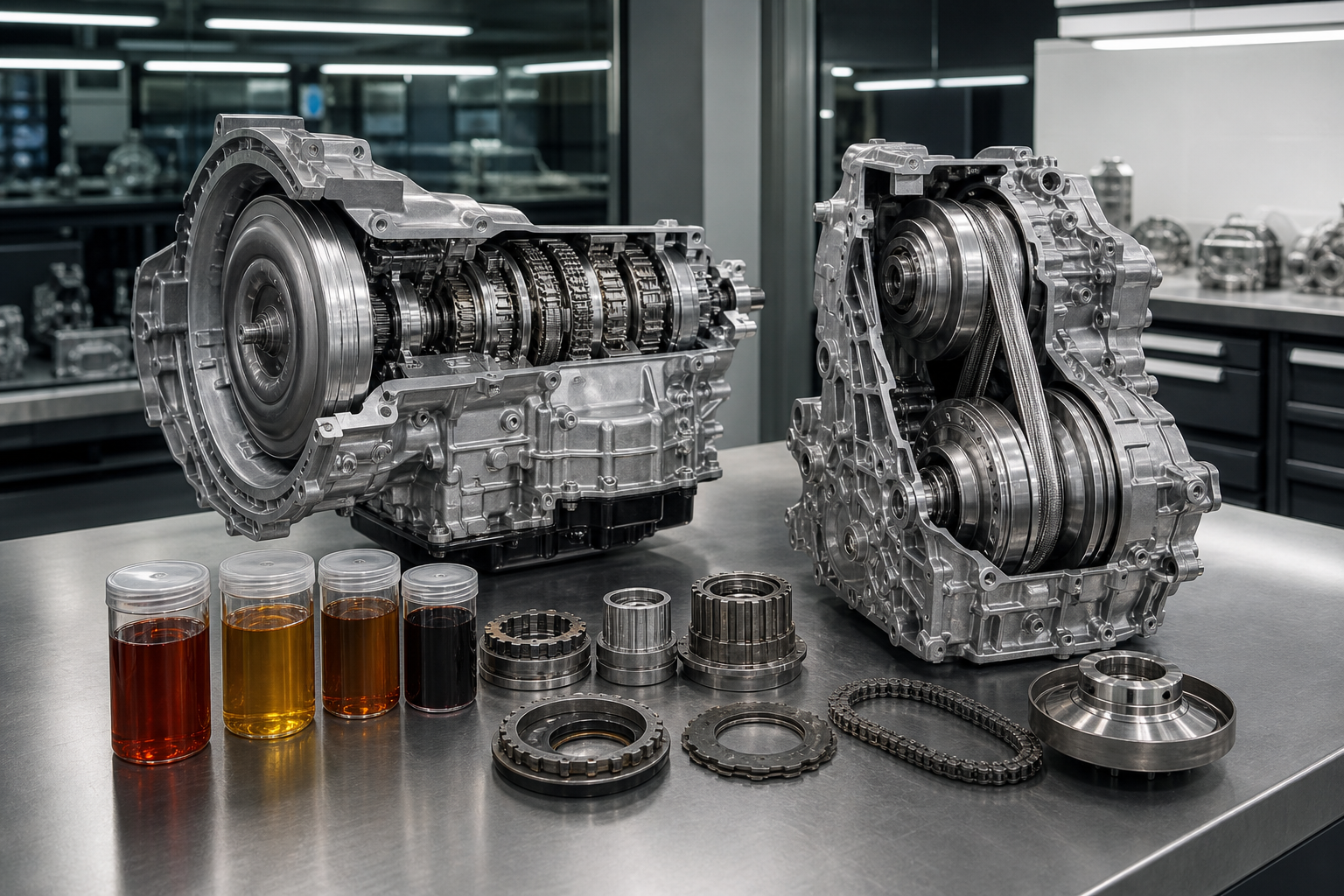
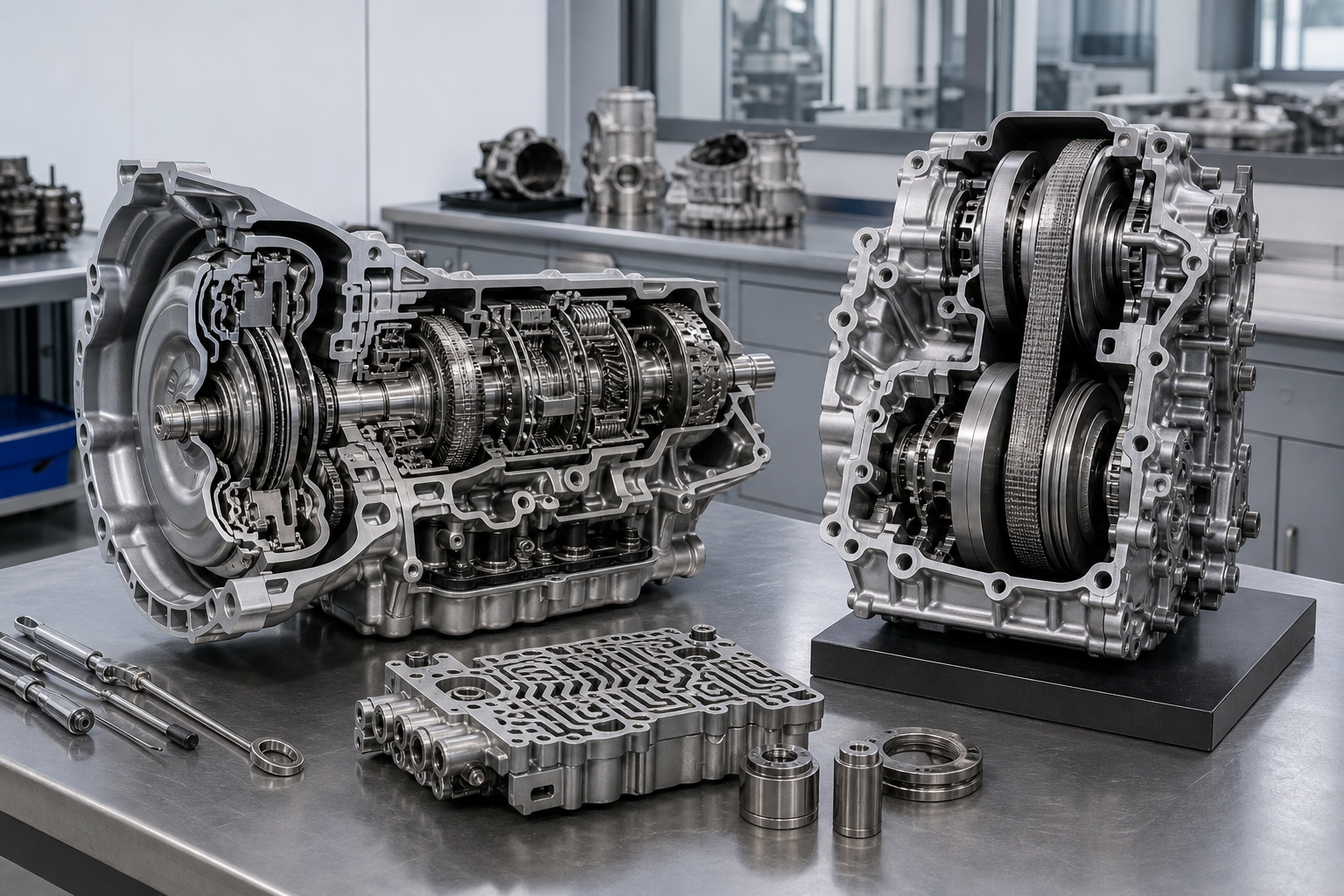
ATF DW-1 is Honda’s automatic-transmission-fluid requirement for many conventional stepped automatic transmissions. These transmissions use multiple planetary gearsets and hydraulically applied clutch packs to select fixed ratios. The fluid therefore has to control clutch friction closely: too much or too little friction can affect shift quality, clutch durability, and shift timing.
Honda owner documentation for vehicles specified for DW-1 instructs owners not to mix it with other transmission fluids and warns that use of a non-equivalent fluid can impair operation and durability. That is a useful reminder that an automatic transmission fluid is not defined only by its kinematic viscosity. The additive package and friction behavior are central to its intended use.
ATF DW-1 may also appear in discussions of older Honda vehicles that originally used ATF-Z1. However, that does not mean DW-1 should be assumed correct for every older Honda drivetrain, every market, or every fluid circuit. Some Honda models have separate fluids for CVTs, manual gearboxes, rear differentials, transfer units, or hybrid drive systems.
What Honda HCF-2 means
HCF-2 is a dedicated Honda CVT-fluid requirement. A belt-type or chain-type CVT does not operate like a conventional stepped automatic. Instead of selecting several fixed gear ratios, it continuously changes the ratio between pulleys. The transmission fluid must support the traction and anti-wear needs of the pulley-and-belt system while also operating hydraulic controls and protecting other internal components.
For that reason, a conventional ATF such as DW-1 is not automatically an HCF-2 substitute, even if both products are low-viscosity transmission fluids. Honda’s documentation for HCF-2-equipped CVTs explicitly says not to mix HCF-2 with other transmission fluids. Honda also identifies HCF-2 as a fluid for its second-generation CVT applications and separately lists other CVT fluids for other applications.
“CVT fluid” is likewise not a universal category. HCF-2 should not be selected merely because the vehicle has a CVT. Earlier Honda CVTs can specify another Honda fluid, and other manufacturers’ CVTs can require their own fluid chemistry. The transmission’s specified requirement controls.
Why the wrong fluid can cause trouble
Mixing or substituting fluids can alter the behavior of friction surfaces and hydraulic controls. The result may be delayed engagement, harsh or flare-like shifts in a conventional automatic, shudder, noise, overheating, or accelerated wear. Symptoms alone do not prove that fluid is the cause, but using the wrong fluid removes an important protection margin designed into the transmission.
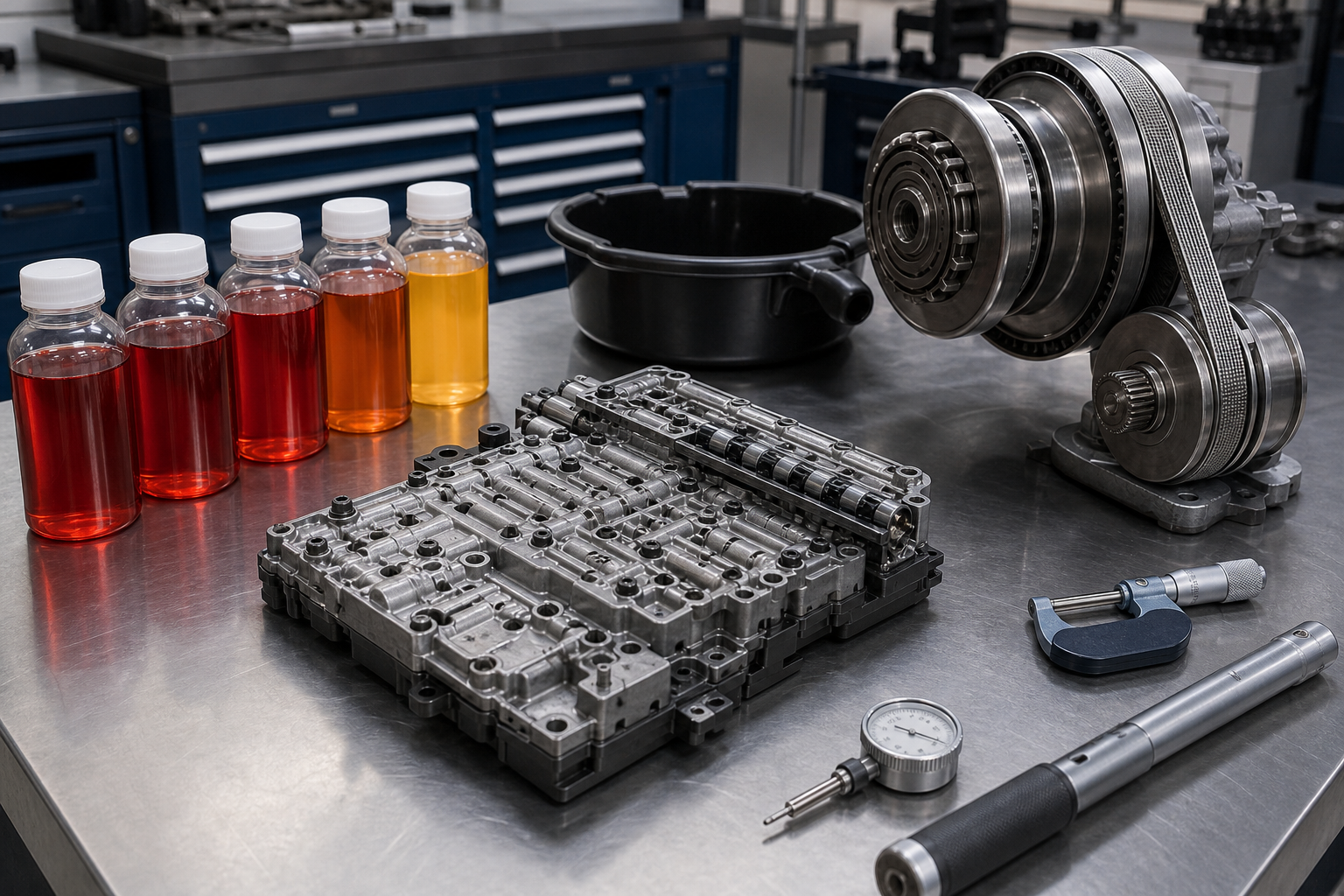
Fluid color is not a reliable identification method. New transmission fluids can be dyed different colors, and used fluid changes appearance with age and heat exposure. Nor does “multi-vehicle ATF” automatically establish suitability. An aftermarket product should state clearly and specifically that it is suitable for the exact Honda requirement, such as ATF DW-1 or HCF-2. A vague claim of compatibility with “Honda vehicles” is not enough.
Honda hybrids and other exceptions
Do not assume that a Honda hybrid uses either DW-1 or HCF-2. Honda has separate fluids for some hybrid-electric drive units, and the requirement can differ even where the vehicle uses an eCVT-style drive system. Honda also lists separate products for manual transmissions, certain rear differential systems, and other driveline components. The word transmission on an invoice is therefore insufficient; the exact fluid requirement should be recorded.
This is especially important when booking service remotely. Provide the VIN, model year, engine or hybrid system, drivetrain, and transmission type. Ask the repairer to confirm the specified fluid before the work begins.
A practical verification checklist
Read the fluids section of the owner’s manual for the exact vehicle.
Confirm whether the vehicle has a conventional automatic, a belt-type CVT, a hybrid drive unit, or a manual transmission.
Match the named requirement exactly: DW-1, HCF-2, or another specified Honda fluid.
For a non-genuine product, look for an explicit claim for that exact requirement rather than a general Honda claim.
Follow the manufacturer’s maintenance schedule and severe-service guidance; do not invent a drain interval from another Honda model.
Retain the invoice showing the product name and specification used.
For broader context on identifying non-interchangeable transmission-fluid requirements, see why universal ATF needs verification. The final authority remains the current vehicle manufacturer documentation for the specific vehicle.