Mercedes-Benz ATF numbers are approval sheets, not viscosity grades
Mercedes-Benz uses numbers such as MB 236.14, MB 236.15 and MB 236.17 to identify automatic-transmission-fluid requirements. They are often called “MB approvals,” “BeVo sheets,” or operating-fluid sheets. The number is not an SAE viscosity grade, an indication of fluid color, or a simple newer-is-better sequence.
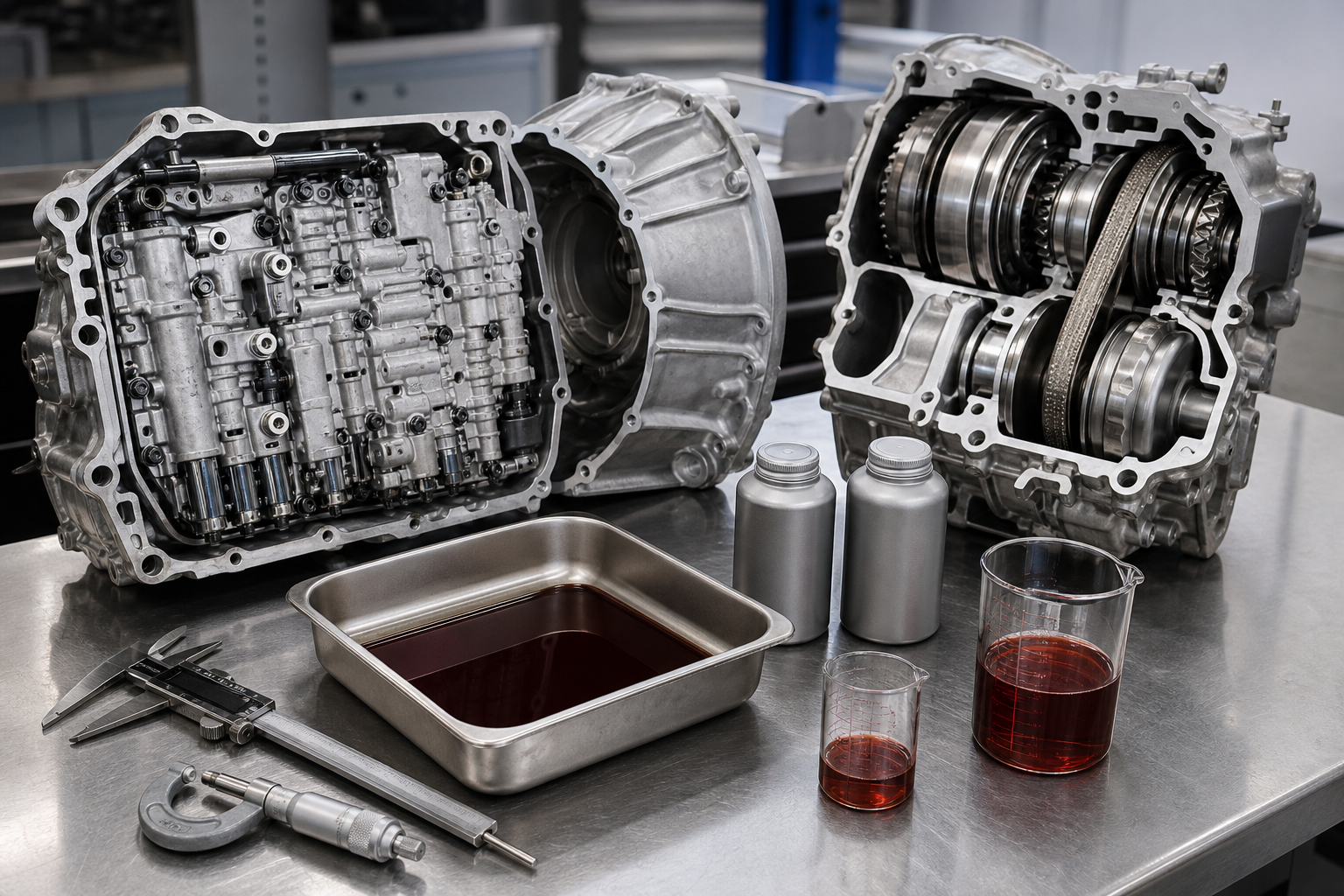
Automatic transmission fluid does much more than lubricate gears and bearings. It operates hydraulic controls, removes heat and determines the friction behavior of clutch packs and torque-converter lockup clutches. A transmission calibration is designed around a particular fluid’s viscosity profile, friction characteristics and durability. A fluid that seems close on a bottle label can therefore be wrong for the unit.
This is why a Mercedes-Benz transmission fluid selection must start with the vehicle’s exact transmission and current manufacturer service information—not simply model year, engine size, number of gears, or the color of the old fluid. For wider background, see why universal ATF needs verification.
What the three sheets mean
Mercedes-Benz’s current Operating Fluids database categorizes all three as ATF sheets, but it gives each a different intended application. Sheet 236.14 is listed for automatic transmissions. Sheet 236.15 covers transfer-case and automatic-transmission applications. Sheet 236.17 covers transfer-case and 9-speed automatic-transmission applications.
The wording matters. It establishes that these are separate fluid families with separate approved-product lists. It does not mean every transmission that happens to have seven or nine forward ratios uses the sheet that seems most intuitive.
| MB sheet | Plain-English description | Practical implication |
|---|---|---|
| 236.14 | ATF for specified Mercedes-Benz automatic-transmission applications. | Commonly encountered on earlier applications, but it is not a blanket fluid for every older Mercedes-Benz automatic. |
| 236.15 | Fuel-economy-oriented ATF family for specified transfer-case and automatic-transmission applications. | Often associated with later 7-speed installations, but vehicle and transmission identification still control. |
| 236.17 | ATF family for specified transfer-case and 9-speed automatic-transmission applications. | It is the relevant sheet for many 9G-TRONIC applications, not a universal substitute for previous ATFs. |
Why 236.15 is not simply an upgrade from 236.14
It is tempting to treat 236.15 as a lower-viscosity, improved version of 236.14 and use it everywhere. That approach is unsafe. Mercedes-Benz and approved-fluid suppliers distinguish the two through separate approval sheets and product lists. A fluid manufacturer may hold formal approvals for both sheets, but that does not make the two requirements interchangeable in every transmission.
Later 7-speed transmissions and variants may use friction-reduced, fuel-economy-oriented ATF. However, a 7-speed transmission designation alone does not settle the question. Mercedes-Benz produced different transmission versions, and some vehicles also have transfer cases, hybrid components or other drivetrain hardware with their own fluid requirements. The transmission’s identification and the vehicle-specific documentation are more reliable than a forum rule such as “all 7G units take blue fluid.”
Fluid color is especially unreliable as a selection method. Dye is a visual aid, not a specification. It can vary by product, market and service history, while aged fluid may darken substantially. Never choose 236.14, 236.15 or 236.17 solely because the drained fluid appears red, blue, green or gold.
Why 236.17 does not replace everything before it
MB 236.17 is associated with specified 9-speed automatic applications. Its approved products are identified as fuel-economy ATF products, reflecting the specific operating and friction demands of those units. That does not authorize its use in a 5-speed or 7-speed automatic, a continuously variable transmission, or a dual-clutch transmission.
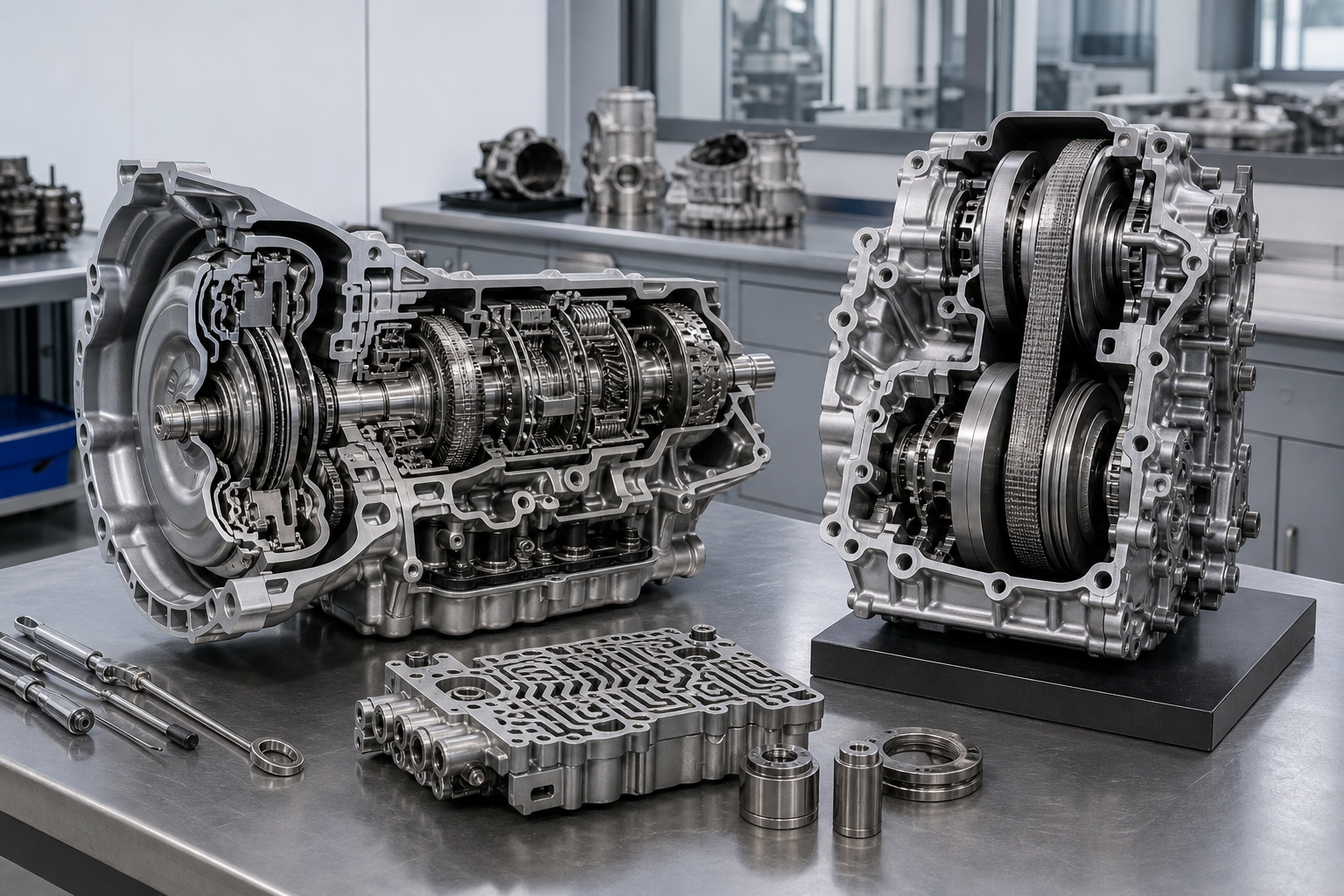
This distinction is important because Mercedes-Benz also maintains separate sheets for other drivetrain types. For example, sheet 236.21 is for a 7-speed dual-clutch transmission, while sheet 236.20 is for a CVT. Those units may all be described loosely as “automatic,” but their clutch arrangements and hydraulic systems differ. An ATF for a conventional torque-converter automatic is not automatically appropriate for a wet-clutch DCT or a belt-and-pulley CVT.
How to verify the right replacement fluid
Read the owner’s manual and current service documentation. Confirm both the required MB sheet and any transmission-specific instructions. Requirements can vary within a model line.
Identify the transmission, not only the vehicle. A VIN-based dealer lookup or professional repair information is particularly useful when a vehicle has a mid-year drivetrain change, all-wheel drive or hybrid hardware.
Check the current Mercedes-Benz Operating Fluids list. The list is updated over time and identifies products accepted under each sheet. An old bottle or an outdated web listing is not proof that a product remains listed today.
Look for the exact approval language. A product carrying the precise MB approval is preferable to one described only as “suitable for,” “recommended for,” or “compatible with” the requirement. Those phrases do not necessarily represent the same manufacturer approval status.
Use the specified service procedure. Correct fluid alone is not enough. These transmissions can require a defined fill temperature, level-setting process, filter and pan-gasket replacement, and diagnostic equipment. Overfill and underfill can both cause shift-quality and reliability problems.
The bottom line
MB 236.14, 236.15 and 236.17 are distinct Mercedes-Benz ATF approval sheets, not a universal hierarchy. Use the exact sheet specified for the vehicle and transmission, select a product currently approved for that sheet, and follow the manufacturer’s prescribed filling procedure. For related manufacturer requirement information, consult the site’s Mercedes oil specifications reference.