Two Toyota fluid names, two different jobs
Toyota ATF WS and Toyota Genuine CVT Fluid FE are easy to confuse because both are low-viscosity transmission fluids used in modern Toyota vehicles. They are not, however, alternative names for the same product. Each is specified for particular transmission hardware, and the vehicle’s current owner’s manual or factory service information—not the model name, model year alone, fluid color, or bottle wording—must decide the choice.
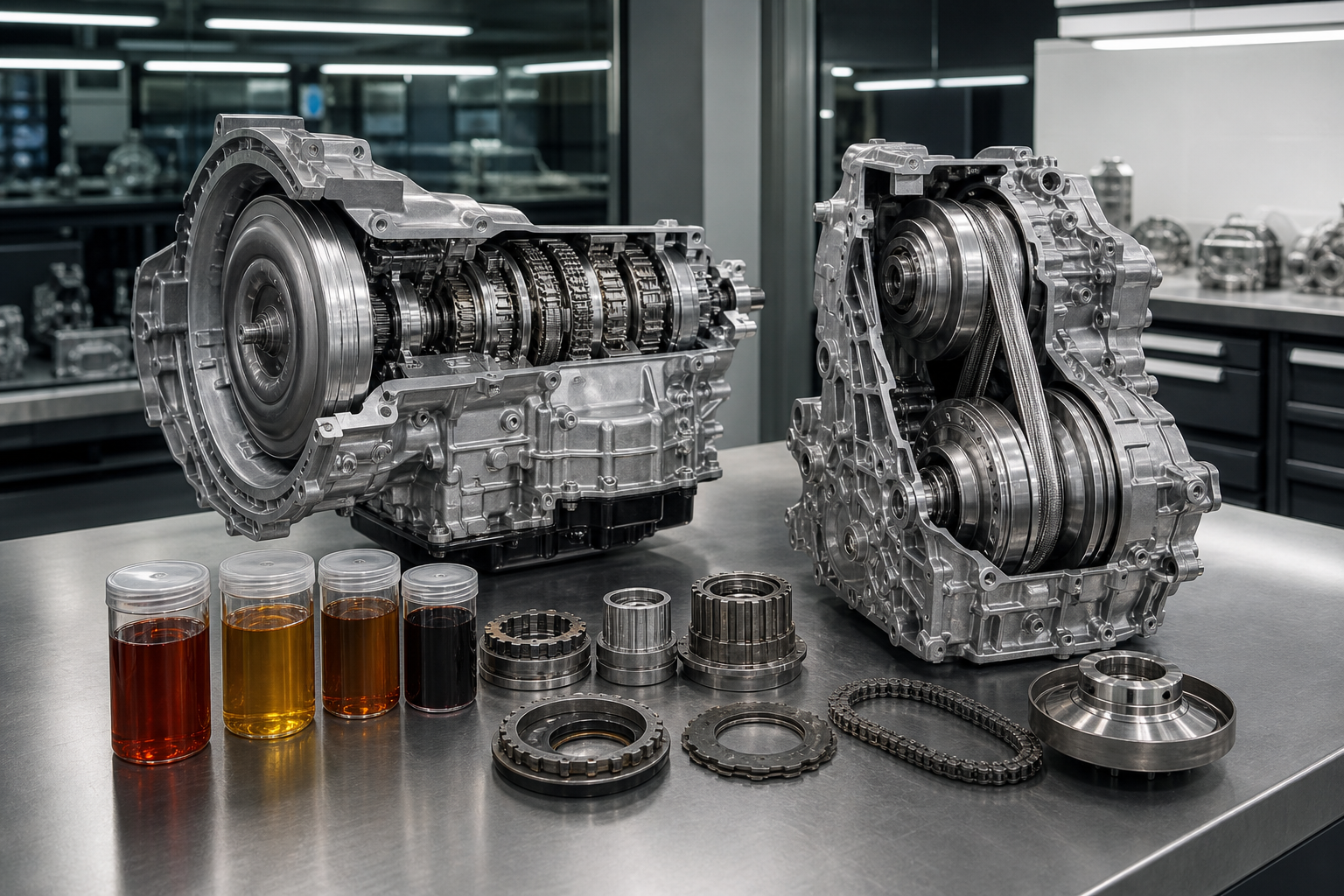
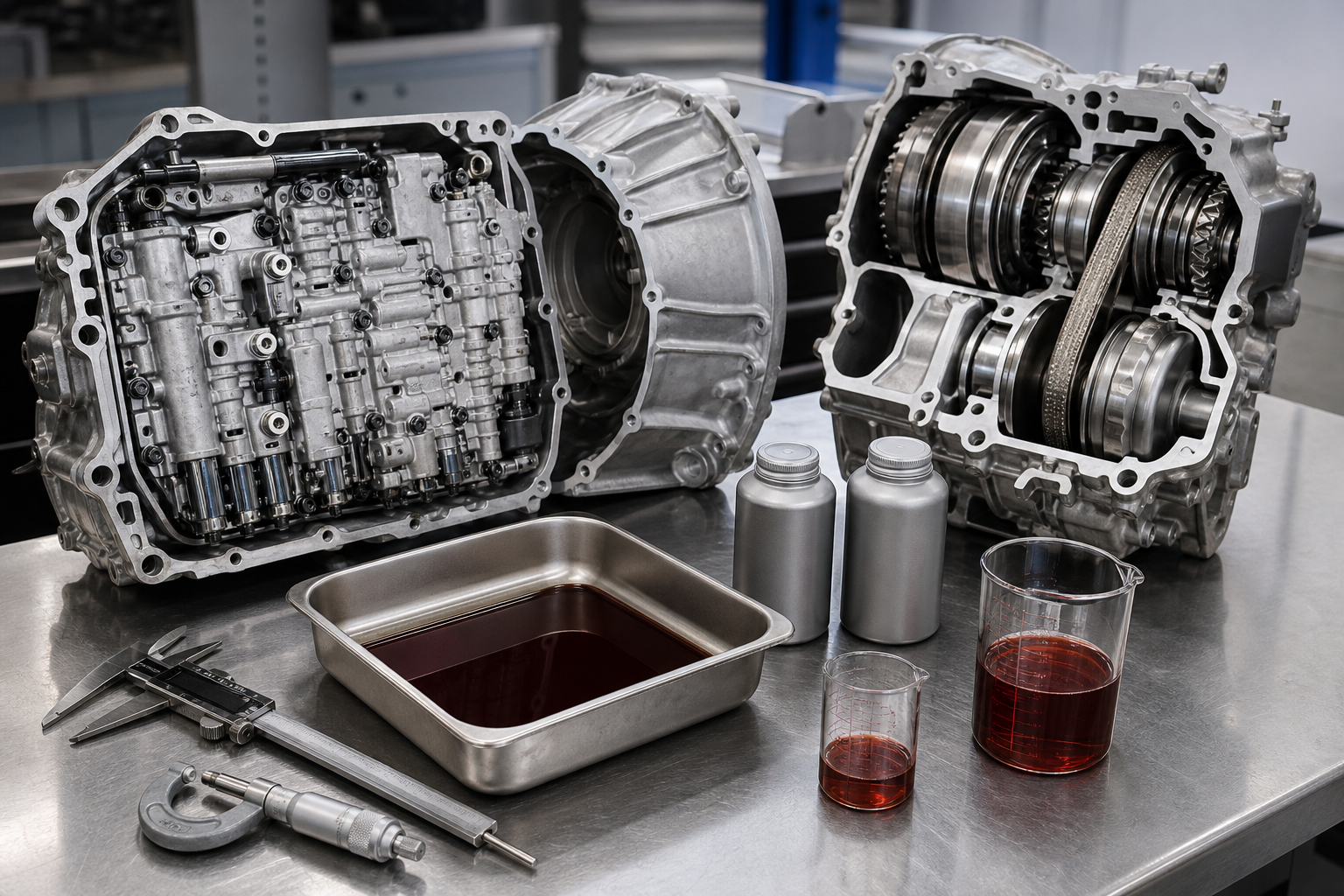
ATF WS is Toyota’s specified fluid in many conventional stepped automatic transmissions and in numerous Toyota hybrid transaxles. CVT Fluid FE is specified in certain conventional continuously variable transmissions, including belt-and-pulley CVTs. Those designs transmit torque differently, so their fluid friction characteristics cannot be assumed to match.
This distinction matters because “CVT” is used casually to describe very different systems. A Toyota hybrid’s electronically controlled transaxle is often called an e-CVT because it provides continuously variable drive ratios. It does not use the same belt-and-pulley arrangement as a conventional CVT. Toyota documentation for several hybrid models specifies ATF WS for the hybrid transaxle, while Toyota documentation for conventional CVT applications specifies CVT Fluid FE.
What Toyota ATF WS means
ATF means automatic transmission fluid. WS is Toyota’s fluid designation, rather than an SAE viscosity grade such as 0W-20 or a broad industry category such as API GL-5. A label saying that an oil is “synthetic” or has a similar kinematic viscosity does not, by itself, establish suitability for an ATF WS application.
In a conventional automatic transmission, the fluid must do several jobs at once: operate hydraulic controls, lubricate gears and bearings, cool components, protect against wear and corrosion, and provide controlled friction for clutch engagement and torque-converter operation. Shift quality and clutch durability depend on the fluid’s friction behavior as well as its viscosity.
Toyota owner documentation identifies ATF WS for a range of conventional automatics. It also identifies ATF WS for hybrid transaxles in some hybrid vehicles and, in some cases, for a rear electric-motor drive unit. That does not mean ATF WS is correct for every Toyota hybrid drivetrain. For example, Toyota documentation for the 2024 Grand Highlander Hybrid distinguishes an ATF WS application from a rear transaxle that requires e-Transaxle Fluid TE. The exact drivetrain is therefore essential.
What Toyota Genuine CVT Fluid FE means
CVT Fluid FE is a separate Toyota fluid designation for applicable conventional continuously variable transmissions. In these transmissions, a steel belt or chain runs between variable-diameter pulleys. The fluid must help control the frictional contact needed to transfer torque without allowing harmful slip, while also lubricating bearings, gears and hydraulic components.
The “FE” suffix should not be treated as permission to substitute any fluid marketed for fuel economy. It is part of Toyota’s specific product name. A current Corolla Cross owner’s manual, for example, specifies Toyota Genuine CVT Fluid FE for its continuously variable transmission and warns against using another fluid type. That instruction is specific to that transmission; it does not make CVT Fluid FE a substitute for ATF WS in a conventional automatic or a hybrid transaxle.
| Fluid designation | Typical application category | What it is not |
|---|---|---|
| Toyota ATF WS | Specified conventional automatic transmissions and some hybrid transaxles | A universal Toyota transmission fluid or a conventional belt-CVT fluid |
| Toyota Genuine CVT Fluid FE | Specified conventional belt-and-pulley CVTs | A replacement for ATF WS based on low viscosity or similar packaging |
| e-Transaxle Fluid TE | Specified newer Toyota electrified transaxle application(s) | Evidence that all hybrid transaxles use the same fluid |
How to evaluate an aftermarket fluid
Some reputable lubricant suppliers sell products formulated for transmissions requiring Toyota WS. For example, AISIN markets ATF-0WS as a fluid formulated for Type WS applications. That can be useful evidence when evaluating a replacement, but it is important to read precisely what the bottle and technical literature say. “Recommended for,” “suitable for,” “meets requirements of,” and a formal vehicle-maker approval are not automatically equivalent claims.
For Toyota ATF WS or CVT Fluid FE applications, start with the fluid name printed in the owner’s manual or service information. Then confirm that the candidate product explicitly identifies that exact application. Do not select a fluid merely because it is labeled multi-vehicle, low-viscosity, full synthetic, or suitable for “Asian vehicles.” These descriptions are too broad to establish the required friction performance.
Also avoid using a bottle’s color as an identification method. Dye color is not a reliable technical specification, and a fluid’s appearance after service can be affected by age, heat and contamination. The vehicle requirement and the product’s documented application statement are more useful evidence.
Capacity and service procedure are separate questions
A listed transmission capacity is commonly a reference quantity, not necessarily the amount that will drain during routine service. The amount removed can differ from total system capacity because fluid remains in internal passages, a torque converter, a cooler circuit, or other components. Toyota manuals themselves describe the stated capacity as a reference quantity and direct owners to a dealer when replacement is needed.
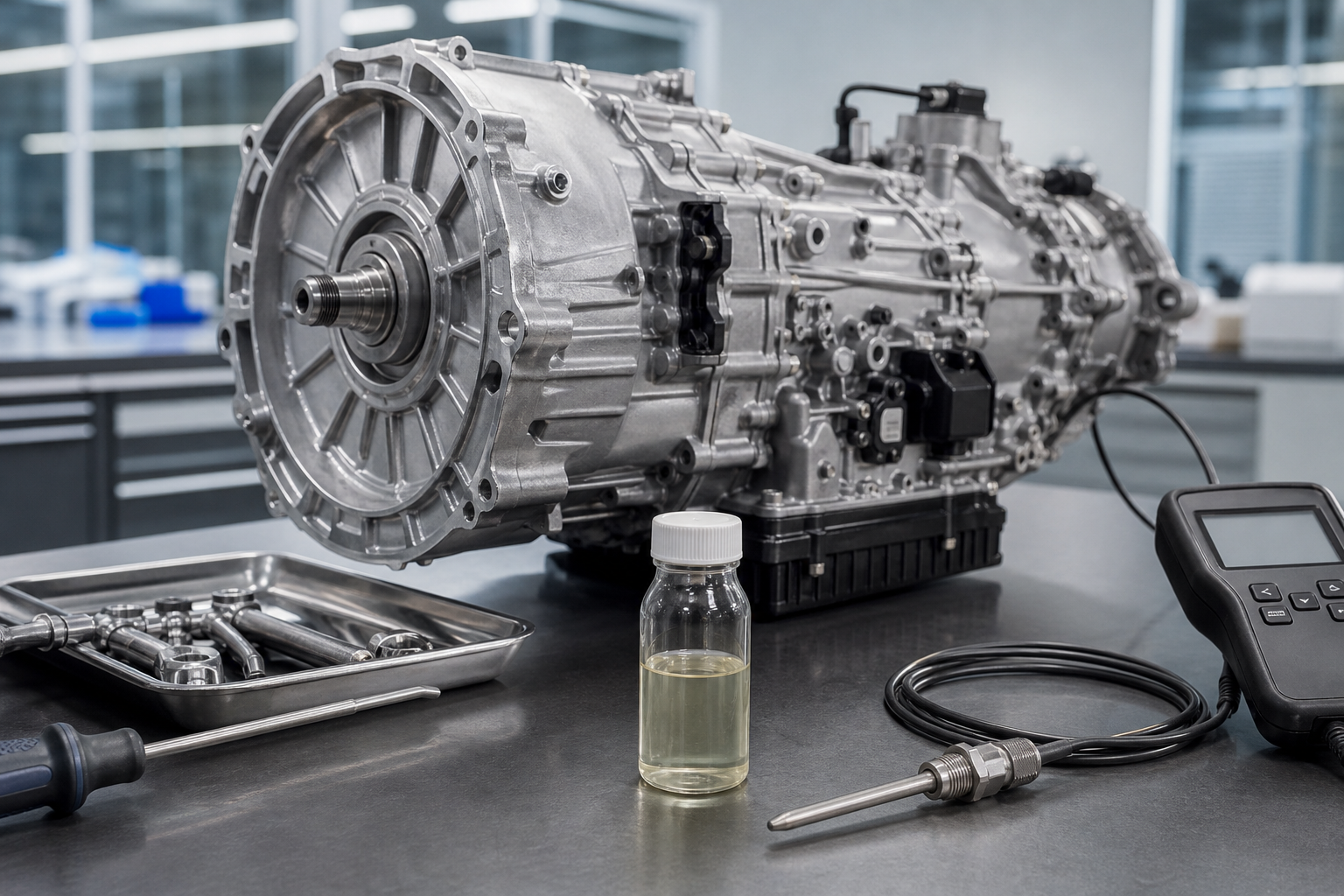
Correct fluid selection also does not replace the specified filling procedure. Many current transmissions do not have a traditional dipstick and require the vehicle to be level, the fluid to be within a specified temperature range, and the level to be set through a check or overflow arrangement. Overfilling or underfilling can cause operational problems even when the fluid type is correct.
Practical selection rule
Identify the exact vehicle, engine or hybrid system, model year, and transmission.
Find the transmission-fluid designation in the current owner’s manual or factory service documentation.
Match the exact designation: ATF WS, CVT Fluid FE, e-Transaxle Fluid TE, or another stated Toyota requirement.
Use the vehicle-specific service procedure and do not rely on total capacity as a fill target.
For wider context on cross-application claims, read why universal ATF needs verification.
In short, ATF WS and CVT Fluid FE are not interchangeable Toyota shorthand. The transmission design controls the fluid choice, and newer electrified models make it especially important to verify the current manufacturer documentation before service.