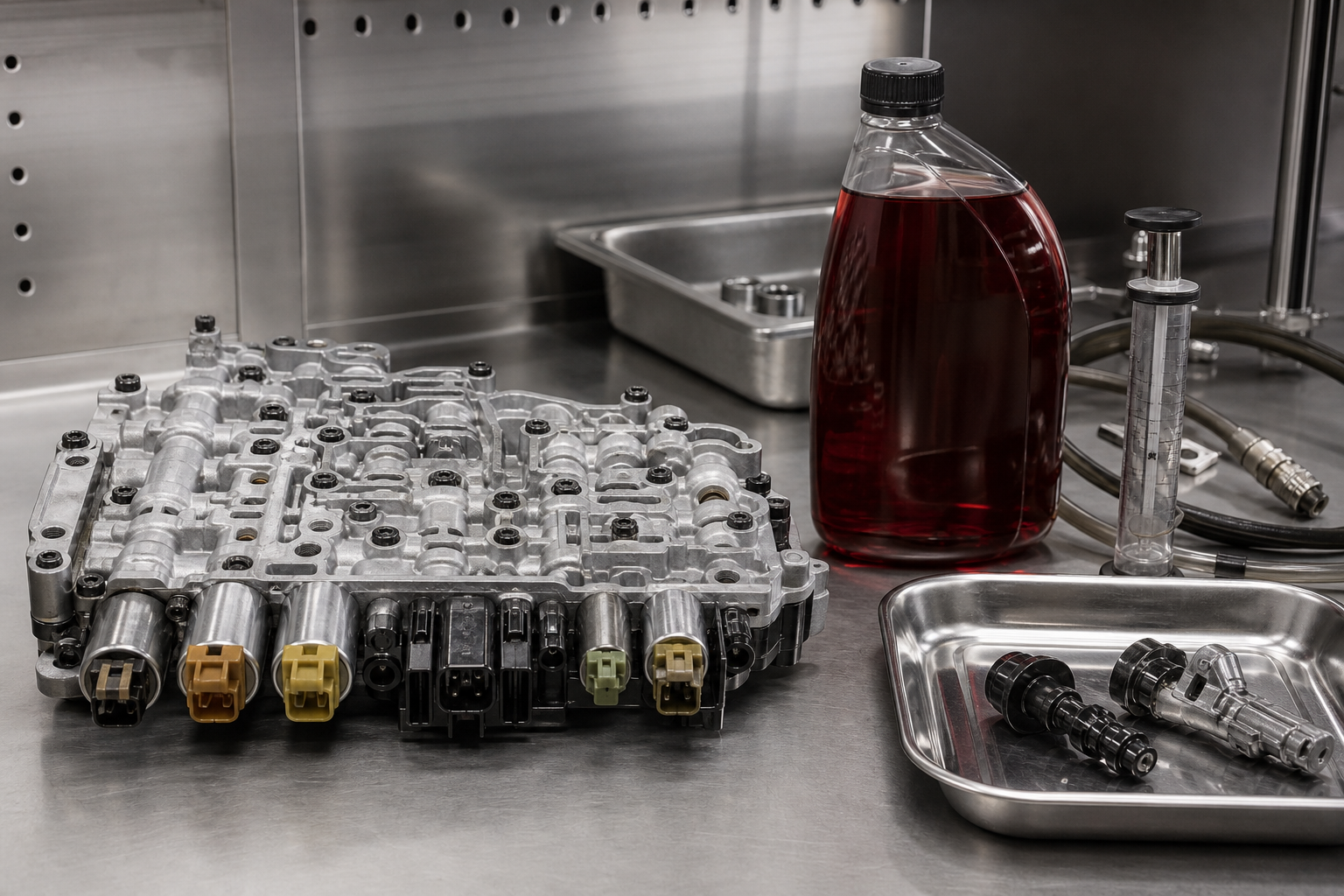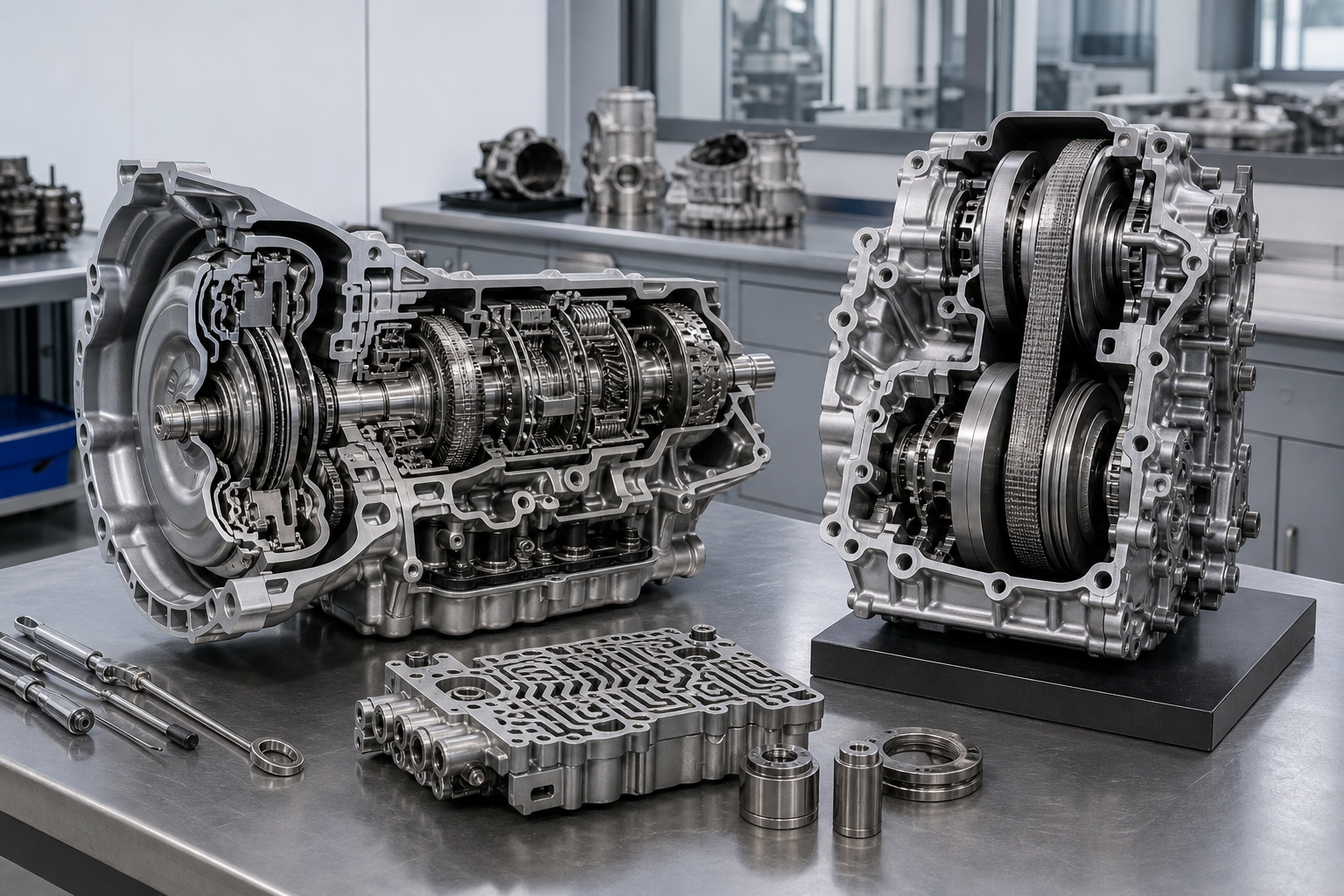
ZF LifeguardFluid is a transmission-specific requirement
ZF LifeguardFluid 8 and ZF LifeguardFluid 9 are automatic-transmission fluids designed for defined ZF transmission families. They are not SAE viscosity grades, and the numbers are not a general hierarchy in which 9 is automatically a newer or better substitute for 8. Each fluid has a particular balance of viscosity, friction characteristics, oxidation resistance and material compatibility for the clutches, hydraulic controls and electronics in the transmission it serves.
This matters because an automatic transmission does much more than lubricate gears. Its fluid operates wet clutches, carries hydraulic pressure through the valve body, transfers heat and helps control shift quality. Two fluids that look similar, or even have similar published viscosity figures, can behave differently at the clutch surfaces. That difference can affect shift consistency, drivability and long-term durability.
For the basic principles behind this issue, see why universal ATF needs verification.
The important distinction: fluid number is not gear count
It is tempting to assume that LifeguardFluid 8 belongs in every ZF eight-speed and LifeguardFluid 9 in every ZF nine-speed. That shortcut is unsafe. ZF’s current TE-ML 11 lubricant list identifies LifeguardFluid 8 for a broad group of conventional 8HP automatic transmissions, including numerous 8HP45 through 8HP95 variants. However, the same list assigns LifeguardFluid 9 to the transverse 9HP48 and 9HP50 families and to certain 8HP plug-in-hybrid variants.
In other words, a transmission’s gear count is only one part of its identity. The exact model suffix, vehicle application, production configuration and whether it is a hybrid are all relevant. An 8HP transmission in one vehicle can require LifeguardFluid 8, while an 8HP hybrid transmission in another can require LifeguardFluid 9 or a dedicated ZF hybrid fluid.
| Fluid name | What it broadly identifies | Why it cannot be selected by name alone |
|---|---|---|
| ZF LifeguardFluid 8 | Service fluid specified by ZF for many conventional 8HP automatic-transmission variants. | Not every transmission marketed as an eight-speed is the same 8HP variant, and some vehicle layouts include separately lubricated driveline components. |
| ZF LifeguardFluid 9 | Service fluid specified by ZF for 9HP48/9HP50 variants and certain 8HP plug-in-hybrid applications. | The “9” does not mean it is a universal nine-speed ATF or an automatic replacement for LifeguardFluid 8. |
| ZF Lifeguard Hybrid fluids | Fluids assigned to particular electrified 8HP applications. | Hybrid transmission hardware introduces electrical-machine and thermal-management requirements that may change the fluid selection. |
Why hybrid applications require extra care
Electrified transmissions can integrate an electric motor and related high-voltage components into or alongside the transmission assembly. The lubrication arrangement, electrical properties and heat-management needs may therefore differ from those of a conventional automatic. ZF’s list separates certain 8HP hybrid variants from conventional 8HP variants and specifies dedicated Lifeguard Hybrid products for some of them.
That is why a vehicle description such as “eight-speed automatic hybrid” is not enough to select oil. The owner’s manual, factory service information and the vehicle manufacturer’s fluid part number should take priority. A technician should also confirm the transmission identification rather than relying only on a parts-catalogue description or the number of forward gears.
OEM labels can describe the same service requirement
ZF supplies transmissions to many vehicle manufacturers. Consequently, the fluid specified in a vehicle manual may carry the automaker’s own name and part number instead of a ZF LifeguardFluid label. ZF’s current lubricant list cross-references LifeguardFluid 8 and LifeguardFluid 9 to selected OEM fluid numbers for particular applications. For example, the list associates LifeguardFluid 8 with several 8HP applications and LifeguardFluid 9 with specified 9HP and hybrid applications.
This does not mean every OEM-labelled ATF is interchangeable across every ZF transmission. The cross-reference must match the exact transmission and vehicle application. Honda’s documentation, for example, specifies ATF-Type 3.1 or higher for certain automatic transmissions and cautions against mixing it with other transmission fluids. That manufacturer instruction is more useful than an assumption based on the ZF brand name alone.
The same logic applies when a transmission is shared across brands: a fluid may have several valid labels, but the relevant label is the one tied to the exact installed transmission.
How to verify the correct fluid
Start with the current vehicle documentation. Confirm the exact required fluid name, part number and any model-year or drivetrain notes in the owner’s manual or factory service information.
Identify the transmission, not just the vehicle. Record the complete ZF model designation when available. Suffixes can matter.
Check whether the vehicle is hybrid, plug-in hybrid, all-wheel drive or rear-wheel drive. These details can alter the applicable transmission fluid and may also mean that transfer-case or differential fluids are separate requirements.
Use ZF’s current TE-ML 11 list as a cross-check. It is a service-fluid approval list, not a substitute for the vehicle maker’s repair procedure.
Evaluate aftermarket claims carefully. A product that states a precise ZF approval or exact OEM fluid requirement is more informative than a broad statement that it is merely “suitable for” many ATFs.
Follow the specified level-setting method. Modern transmissions commonly require a defined fluid-temperature range, level condition and scan-tool procedure. Filling by volume alone can be inaccurate.
Do not confuse transmission fluid with other driveline fluids
Some all-wheel-drive and transaxle applications use more than one lubricant. A differential, transfer unit or final drive may have a separate oil reservoir and a completely different requirement, often a gear oil rather than ATF. ZF’s lubricant list includes footnotes for certain applications where axle or differential lubrication is separate from the automatic-transmission fill. Do not assume that the fluid used in the transmission pan belongs in every connected driveline component.
For a related explanation of why gear-oil labels also need careful interpretation, see API GL-4 and GL-5 explained.
The practical takeaway
ZF LifeguardFluid 8 and 9 identify different transmission-fluid requirements. LifeguardFluid 8 is commonly associated with many conventional ZF 8HP units, while LifeguardFluid 9 covers defined 9HP units and selected 8HP hybrid applications. Neither designation is a viscosity grade, a universal ATF category or a simple upgrade path.
Before servicing any ZF-equipped vehicle, verify the complete transmission application, the current vehicle manufacturer requirement, the correct service procedure and the fluid’s documented approval or exact OEM equivalency. That process is more reliable than choosing by bottle color, gear count or marketing language.