What Chrysler MS-6395 means
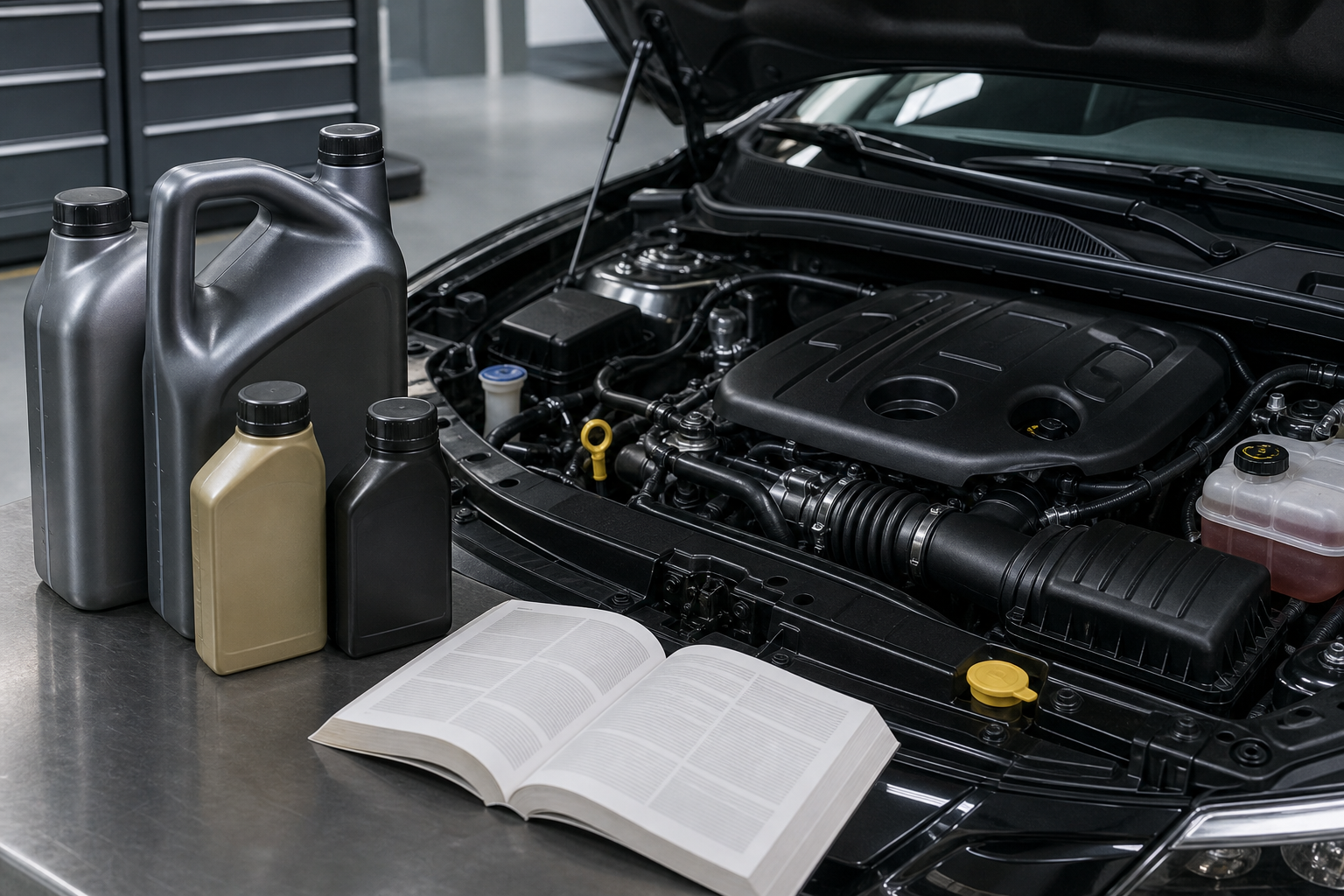
Chrysler MS-6395 is an FCA US/Stellantis North America engine-oil material requirement used on many gasoline-powered Chrysler, Dodge, Jeep and Ram vehicles. In plain English, it is the vehicle maker’s way of defining an oil suitable for certain engines beyond simply saying “use 0W-20” or “use API oil.”
The important word is certain. MS-6395 is not a universal Chrysler-family requirement, and it is not interchangeable with every other manufacturer material standard. The owner’s manual for the exact model year and engine remains the controlling document.
It is not an oil viscosity grade
MS-6395 and SAE viscosity describe different things. A viscosity grade such as 0W-20, 5W-20 or 5W-30 indicates how an oil flows at low temperature and its viscosity range at operating temperature. The material standard identifies a broader set of performance expectations set by the vehicle manufacturer.
That distinction matters because the same MS-6395 label has appeared alongside more than one viscosity grade. For example, recent manufacturer manuals specify MS-6395 with 0W-20 for some engines, while older applications may call for 5W-20, 5W-30 or another grade. An oil marked MS-6395 but carrying the wrong SAE grade is not automatically acceptable.
For a refresher on what the numbers mean, see how engine-oil viscosity grades work.
How API and ILSAC marks fit in
Many MS-6395 applications also require an API certification mark. The API Starburst is especially relevant where the manual calls for an ILSAC passenger-car oil, while the API Donut identifies the service category and, where applicable, resource-conserving status. These marks show that an oil has been licensed under API’s engine-oil program; they do not by themselves prove suitability for every engine.
That is why a manual may specify all of the following:
a particular viscosity, such as SAE 0W-20;
MS-6395;
an API certification mark or service category; and
sometimes an ILSAC category, such as GF-6A.
Each item narrows the choice. Treat them as combined requirements rather than alternatives. An API-certified 5W-30 is not necessarily a replacement for an MS-6395 0W-20 application, and an oil of the correct viscosity is not necessarily acceptable merely because it is synthetic.
Readers comparing API categories and packaging marks can consult the site’s API engine-oil service category charts.
Why MS-6395 does not cover every current Stellantis engine
A useful example is found within the current Jeep range. A 3.6-liter Grand Cherokee application uses 0W-20 meeting MS-6395, but the 2.0-liter turbocharged engine is specified differently: 5W-30 with MS-13340 and API SP/GF-6A requirements. The correct choice therefore follows the engine, not the grille badge, model name or a general statement that an oil is “for Chrysler vehicles.”
The same principle applies across model years. A late-model Ram or Durango manual can call for MS-6395 and 0W-20, yet that does not revise the requirements for an older vehicle that originally specified a different viscosity. Manufacturer recommendations can also differ between engine versions offered in the same model.
How to read an oil label or data sheet
When MS-6395 is required, start with the manual and oil-fill-cap information, then check the product label and the current product data sheet. Look for the exact SAE viscosity first. Next, confirm the required API or ILSAC wording and the MS-6395 claim.
Be precise about the wording used by the oil marketer. Some products say they “meet” or “meet the requirements of” MS-6395; others use “recommended for” language. Those are manufacturer product claims, not automatically equivalent to a publicly searchable OEM approval listing. Keep the invoice and product data sheet if documentation is important for warranty or fleet records, and ask the vehicle manufacturer or dealer when the manual is unclear.
Does newer API performance replace MS-6395?
Not automatically. Newer API and ILSAC categories bring updated industry performance tests and may be backward compatible within their own category systems. But API itself advises vehicle owners to consult their owner’s manuals. A general API category does not override a vehicle maker’s specified viscosity, manufacturer standard, drain interval or special engine requirement.
In practice, a modern API-certified oil that also states it meets MS-6395 may be appropriate for an MS-6395 application only if it has the viscosity and other characteristics required by that vehicle’s current documentation. Do not use the MS-6395 claim to substitute an oil for an engine calling for MS-13340, a European Stellantis/Fiat specification, a diesel specification, or another dedicated requirement.
Practical selection checklist
Identify the exact vehicle, model year and engine—not just the brand.
Use the viscosity printed in the current owner’s manual or on the oil-fill cap where the manual directs you to it.
Match MS-6395 only when the manual requires it.
Confirm the requested API and, where specified, ILSAC certification level or mark.
Check the oil maker’s current data sheet rather than relying only on an old bottle, retailer filter or forum post.
Follow the vehicle’s oil-life monitor and maintenance instructions; using synthetic oil does not by itself authorize a longer drain interval.
MS-6395 is best understood as one part of a complete oil instruction. It can be highly useful for narrowing the selection, but it never replaces the exact viscosity and performance requirements published for the vehicle in front of you.