MB approval comes before the viscosity grade
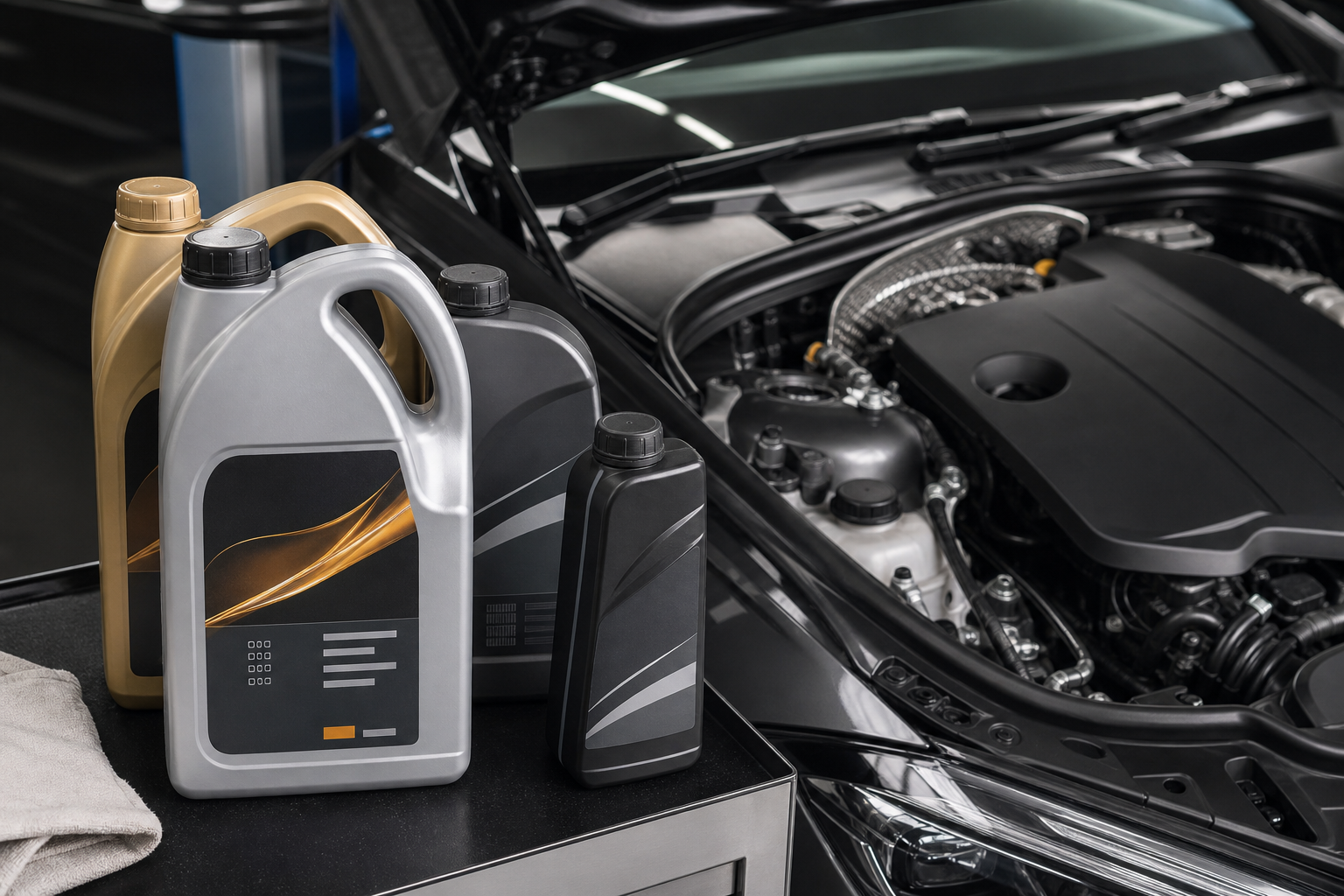
A Mercedes-Benz engine-oil requirement is normally written as an MB-Freigabe, or MB approval, followed by a number such as 229.5 or 229.71. The number identifies a Mercedes-Benz-defined oil performance specification. It is not a shorthand for a viscosity grade, a model year, or simply an indication that an oil is “premium.”
This matters because oils carrying the same SAE viscosity grade can have very different additive chemistry and test performance. A 5W-30 oil may hold MB 229.5, MB 229.51, MB 229.52, another manufacturer approval, or none at all. Conversely, Mercedes-Benz’s current approved-product lists show that some MB 229 approvals encompass more than one viscosity grade. Select the required approval first, then select a viscosity grade that is permitted for the applicable engine and climate.
Mercedes-Benz publishes approved oils by MB sheet number and separately identifies which sheets are acceptable for particular passenger-car and van engines. This is why the owner’s manual, digital manual, or the current Mercedes-Benz operating-fluids lookup is more useful than choosing oil by engine displacement or by what a previous vehicle used. For background on how viscosity is measured and labelled, see what oil viscosity means.
What “Low SPAsh” means
Several MB 229 sheets are described by Mercedes-Benz as Low SPAsh oils. The term refers to controlled levels of sulfated ash, phosphorus and sulfur. These components are connected to the oil’s additive system. Limiting them can help protect exhaust-aftertreatment hardware, including particulate filters and catalysts, while the oil still has to deliver wear control, cleanliness, oxidation resistance and other engine protection.
Low SPAsh does not mean that every low-ash oil is interchangeable. An ACEA C-category claim can be relevant supporting information, but it is a category-level performance claim rather than proof of a particular Mercedes-Benz approval. Read more in ACEA engine-oil claims explained.
The main passenger-car MB 229 approvals
| MB sheet | Mercedes-Benz description | Practical reading of the label |
|---|---|---|
| 229.5 | Multigrade service engine oils | A non-Low-SPAsh MB approval. The approved list includes several grades, including 0W-30, 0W-40, 5W-30 and 5W-40. |
| 229.51 | Low SPAsh multigrade service engine oils | An established low-SPAsh approval. It remains relevant where the vehicle documentation specifically permits or requires it. |
| 229.52 | Low SPAsh multigrade service engine oils | A later low-SPAsh approval with its own approved-product list. Current listings include 0W-30, 0W-40, 5W-30 and 5W-40 oils. |
| 229.71 | Low SPAsh multigrade service engine oils | A low-viscosity approval; the current approved list is headed by SAE 0W-20 products. |
| 229.72 | Low SPAsh multigrade service engine oils | Another low-viscosity Low SPAsh approval; the current approved list is likewise headed by SAE 0W-20 products. |
The table is a guide to reading the designations, not a substitution chart. In particular, the higher-looking number does not automatically mean “better,” and it does not establish backward compatibility. MB 229.71 and 229.72 are not generic upgrades for every engine previously filled with 5W-30 or 5W-40 oil. Their low-viscosity character can be central to the intended engine application.
Why 229.51 and 229.52 should not be treated as identical
Both 229.51 and 229.52 are Low SPAsh approvals, and an oil can appear on both official lists. That overlap is useful, but it does not make the two sheet numbers synonymous. Each is a separate Mercedes-Benz approval, and an oil approved only to 229.51 should not be assumed to meet 229.52 unless the latter approval is explicitly stated and can be verified on the current Mercedes-Benz list.
The same discipline applies in the other direction. If a manual calls for 229.51, do not replace it with 229.52 merely because it seems newer. Some engine entries in Mercedes-Benz’s vehicle-and-engine application sheet permit several approvals; others have narrower requirements or viscosity restrictions. The exact engine variant, market and vehicle documentation matter.
How to verify an oil correctly
Find the required MB sheet number. Use the current owner’s manual or Mercedes-Benz service information for the vehicle, not a generic online oil finder.
Check the stated viscosity grade. Where the manual provides a viscosity restriction, follow it even if another viscosity appears on the same MB approval list.
Look for an actual approval statement. Prefer wording such as “MB-Approval 229.52” or “MB-Freigabe 229.52,” rather than vague wording such as “suitable for” or “recommended for.”
Confirm the exact product. Approval applies to a specific formulation and viscosity grade, not automatically to every oil in a brand family.
Use the current approved-product list as a cross-check. Mercedes-Benz’s lists are updated, so product names and approvals can change over time.
For a top-up, the specified approval remains the goal. If the correct oil is temporarily unavailable, follow the vehicle manual’s emergency top-up guidance rather than treating an alternative oil as an approved routine-service fill. After service, retain the invoice or record the exact product and approval used. Then follow the vehicle’s maintenance system or specified interval; oil approval does not by itself authorize a longer drain interval. See our guide to oil drain intervals for the factors that determine change timing.
The bottom line
MB 229 numbers describe distinct Mercedes-Benz oil approvals. The most reliable choice is not the thickest oil, the newest-looking number, or the bottle with the longest claim list. It is an oil in the required viscosity grade that carries the exact MB approval specified for the vehicle and is verifiable in current Mercedes-Benz documentation. For broader model-specific reference material, consult the site’s Mercedes oil specifications page.